
Modern Bathroom Faucet Trends 2025

2025 Faucet Design & Specification Guide

Smart, Efficient Faucets for Modern Commercial Bathrooms

Commercial bathroom projects increasingly require faucets that combine touchless operation, durable architectural finishes, water-efficient performance, and practical long-term serviceability. Designers and facility teams should evaluate these features alongside installation compatibility, maintenance access, and the demands of the intended application.

Designers and facility teams evaluating sensor-based fixtures can review our Touchless Faucets for Commercial Office Restrooms for additional guidance on power, sensor operation, maintenance, and commercial-use planning.

For verified water-efficiency information, consult the U.S. EPA WaterSense bathroom faucet guidance when evaluating applicable faucet performance and efficiency requirements.

2025 Faucet Trend Focus: Compare touchless bathroom faucets, matte black and brushed-gold finishes, water-efficient performance, installation compatibility, durability, and serviceability before specifying a modern faucet for a commercial bathroom project.
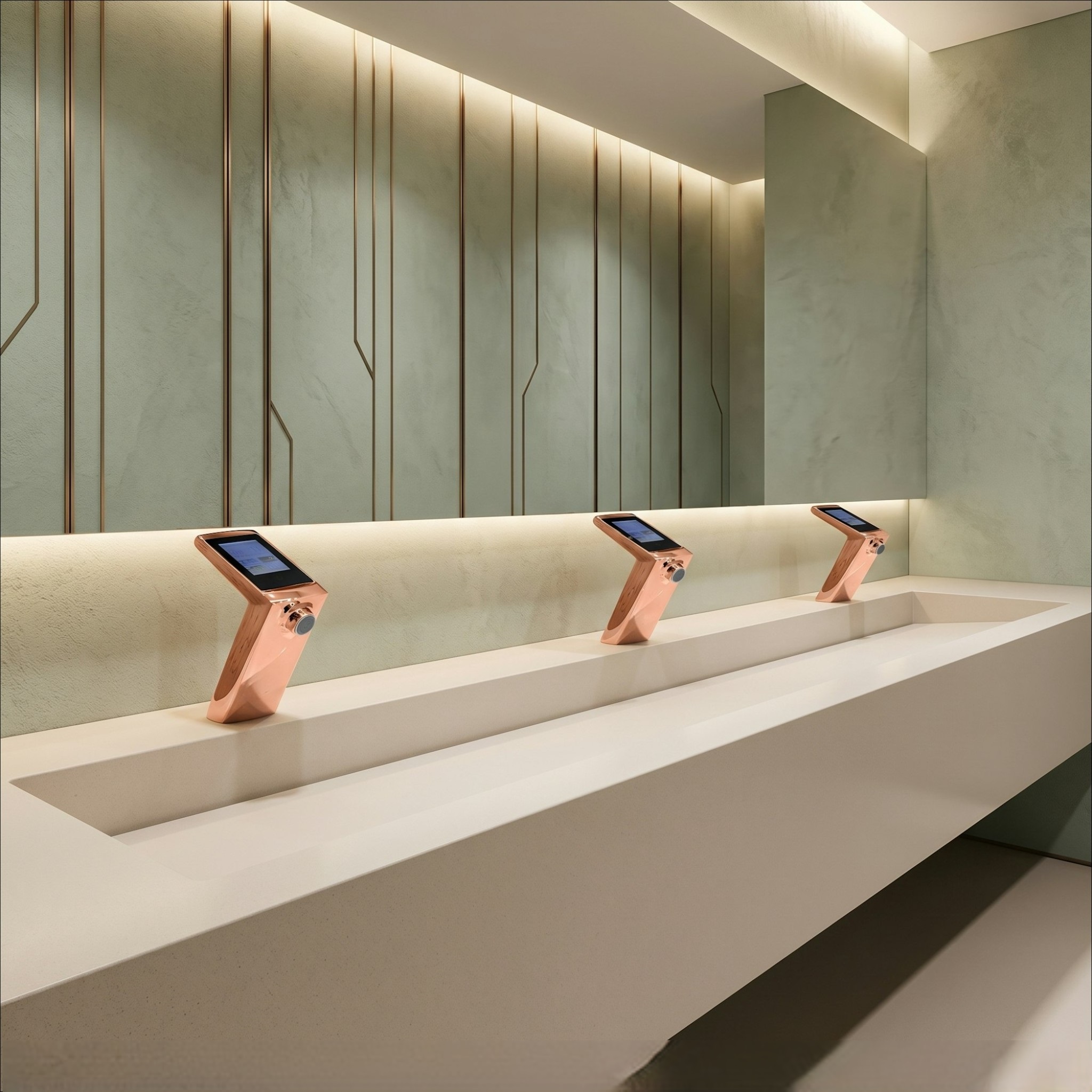
Smart digital bathroom faucets in a modern commercial restroom

Smart and Touchless Faucet Technology

Modern bathroom faucet design increasingly combines clean architectural styling with practical technology. Touchless activation, sensor-controlled operation, and streamlined controls can support convenient handwashing while reducing unnecessary contact with faucet handles. For commercial bathrooms, the most useful technologies are those that also simplify installation, maintenance, and long-term servicing.

For commercial projects, compare sensor reliability, power architecture, flow control, finish durability, maintenance access, and replacement-part availability rather than evaluating touchless technology by appearance alone. For a deeper specification perspective, review Touchless Faucets for Commercial Office Restrooms .

Modern Finishes and Water-Efficient Design

Matte black, brushed gold, and chrome remain important finish options for contemporary bathroom projects, allowing faucets to coordinate with surrounding fixtures and architectural finishes. At the same time, appearance should be considered alongside water efficiency, flow performance, durability, cleaning requirements, and suitability for the intended level of use.

In high-use commercial environments, finish selection should also consider resistance to frequent cleaning, fingerprints, water spots, abrasion, and long-term replacement consistency. Additional guidance is available in The Perfect Balance of Style and Function: Commercial Bathroom Faucets .
Choosing a Modern Bathroom Faucet

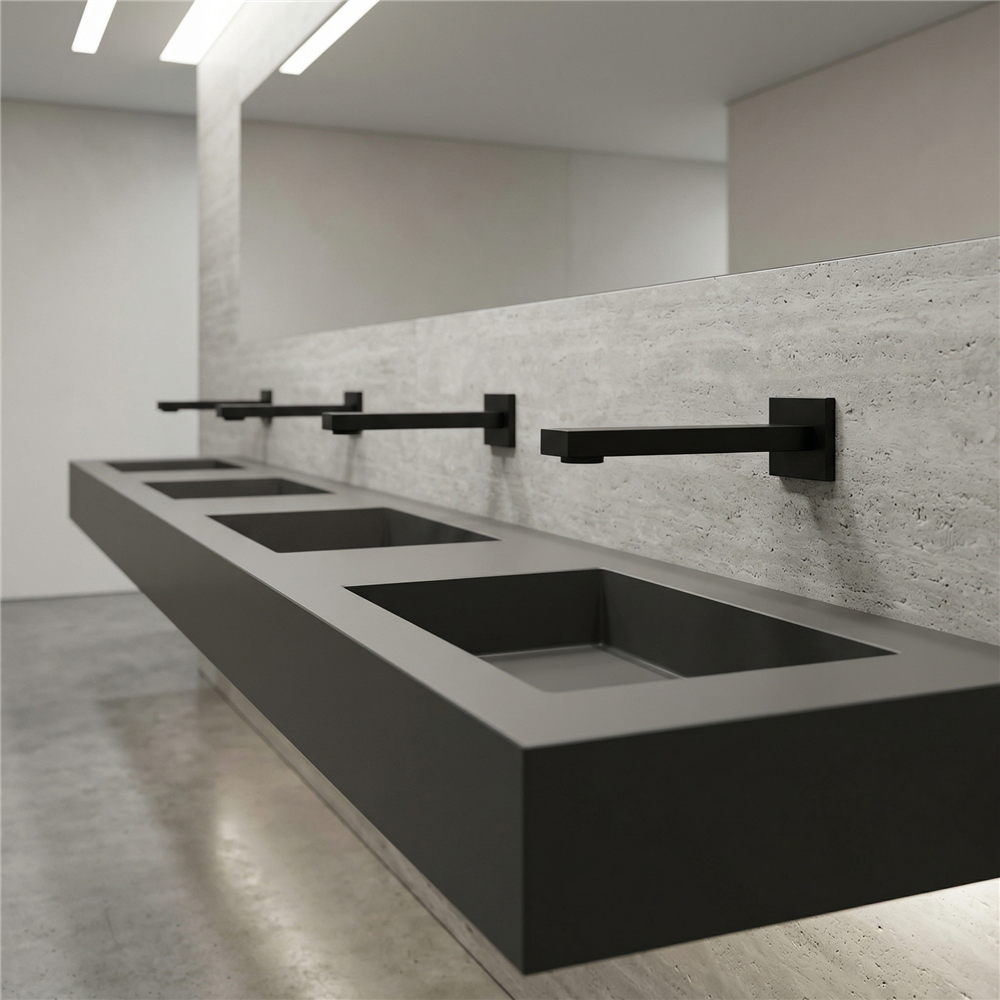
A modern faucet should be evaluated as more than a decorative fixture. Buyers, designers, and project teams should compare mounting configuration, dimensions, finish compatibility, flow characteristics, control type, installation requirements, maintenance access, and replacement-part availability. When comparing available configurations and finishes, the BathSelect bathroom faucet collection provides additional product examples for reviewing contemporary bathroom faucet options.

Before selecting a model, verify the sink or countertop hole pattern, mounting surface, supply connections, basin geometry, and service access. These conditions can determine whether a single-hole, centerset, widespread, wall-mounted, or sensor faucet is the most practical choice. For installation planning, review the bathroom sink faucet installation guide .

Key Takeaways

Modern Bathroom Faucet Trends 2025: What Matters Most

Modern bathroom faucet selection in 2025 is increasingly shaped by the balance between design, touchless operation, water-efficient performance, finish durability, installation compatibility, and long-term serviceability. A faucet should therefore be evaluated as part of the complete bathroom specification rather than as a decorative fixture alone.

Technology Compare sensor reliability, power options, activation performance, and maintenance access before selecting a touchless faucet.
Finish & Durability Evaluate matte black, brushed gold, chrome, and other finishes for cleaning requirements, wear resistance, and project-wide consistency.
Water Performance Review flow performance and applicable water-efficiency requirements together with user experience and intended application.
Installation & Service Confirm mounting configuration, plumbing connections, power requirements, replacement parts, and future service access before specification.
Specification takeaway: The most effective modern bathroom faucet is not simply the newest design or finish. It is the fixture that matches the project’s architectural intent while also meeting operational, installation, water-performance, maintenance, and lifecycle requirements.

Continue with our Touchless Faucets for Commercial Office Restrooms guide for additional sensor-faucet planning and commercial specification guidance.


Practical Selection FAQ

Modern Bathroom Faucet Trends 2025: Common Selection Questions

These practical questions help project teams compare modern faucet technology, finish selection, water performance, accessibility, installation, and long-term service requirements before specification.

Are touchless faucets a practical choice for modern commercial bathrooms?

Touchless faucets can be practical when sensor performance, power architecture, flow control, installation conditions, maintenance access, and replacement components are evaluated for the intended application. Hands-free activation should therefore be considered together with reliability and serviceability. For additional project-planning guidance, review our Touchless Faucets for Commercial Office Restrooms .

How should water efficiency be evaluated for a commercial bathroom faucet?

Flow performance should be evaluated according to the faucet type and intended application rather than assuming that every commercial faucet follows the same efficiency program. EPA notes that its WaterSense faucet labeling criteria currently apply to private lavatory faucets, while public lavatory faucets are treated separately. Verify the applicable requirements using the U.S. EPA WaterSense bathroom faucet guidance .

What accessibility requirements should be considered when selecting faucet controls?

Where accessibility requirements apply, faucet controls should be coordinated with the applicable operable-parts requirements. The 2010 ADA Standards state that operable parts must be usable with one hand without tight grasping, pinching, or twisting of the wrist, with a maximum activating force of 5 pounds. See the official 2010 ADA Standards for Accessible Design .

What should be checked before specifying a modern bathroom faucet?

Confirm mounting configuration, sink or countertop hole pattern, basin geometry, supply connections, flow requirements, control type, power requirements for electronic models, finish suitability, maintenance access, and replacement-part availability before final specification. Installation conditions should be confirmed before product selection; see our Bathroom Sink Faucet Installation Guide for additional installation-planning context.

Mira Lennox

Mira Lennox is a staff writer and editorial team member at commercialbathroomfaucets.com. Mira's editorial work focuses on commercial faucet features, comparisons, maintenance, and purchasing considerations, with articles based on product documentation, recognized standards, manufacturer materials, and attributable sources to support informed planning and purchasing decisions.