Commercial Faucets as Distributed Hydraulic Control Nodes
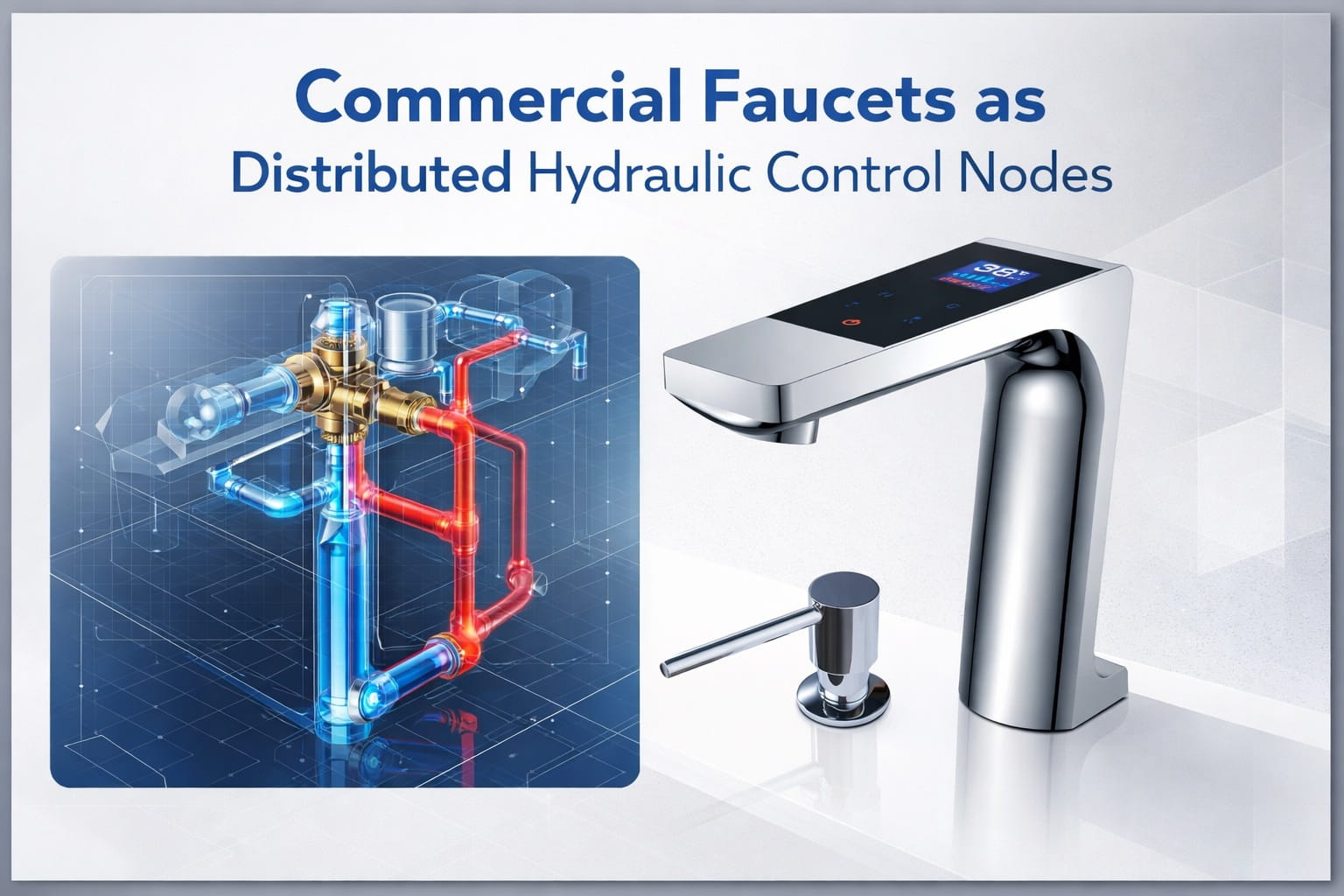
Commercial faucets operate as electromechanical hydraulic regulators positioned at the terminal interface between engineered pressurized water distribution systems and human interaction. Their function integrates fluid mechanics, materials science, electronic control systems, and probabilistic demand modeling. These fixtures must maintain operational stability under high-frequency actuation, pressure variability, thermal cycling, and contamination exposure common in high-traffic infrastructure environments.
Delta Commercial Faucet Engineering Reference
Fluid Mechanics and Hydraulic Engineering
Continuity Equation and Flow Conservation
Commercial faucet discharge behavior follows conservation of mass principles governing incompressible flow. Volumetric flow rate remains constant across internal geometries, while velocity increases proportionally as cross-sectional area decreases. This velocity amplification governs discharge characteristics and hydraulic energy distribution across solenoid valves, cartridges, and aerators.
Kohler Commercial Faucet Hydraulic Architecture
Pressure-Velocity Energy Conversion and Bernoulli Effects
Internal faucet restrictions convert pressure energy into velocity energy according to Bernoulli conservation relationships. Engineered flow restrictors create controlled pressure drops that maintain compliance with regulatory flow limits while preserving discharge velocity sufficient for effective washing performance and turbulence conditioning.
Moen Electronic Faucet Flow Regulation Engineering
Infrared Sensor Detection and Signal Processing Engineering
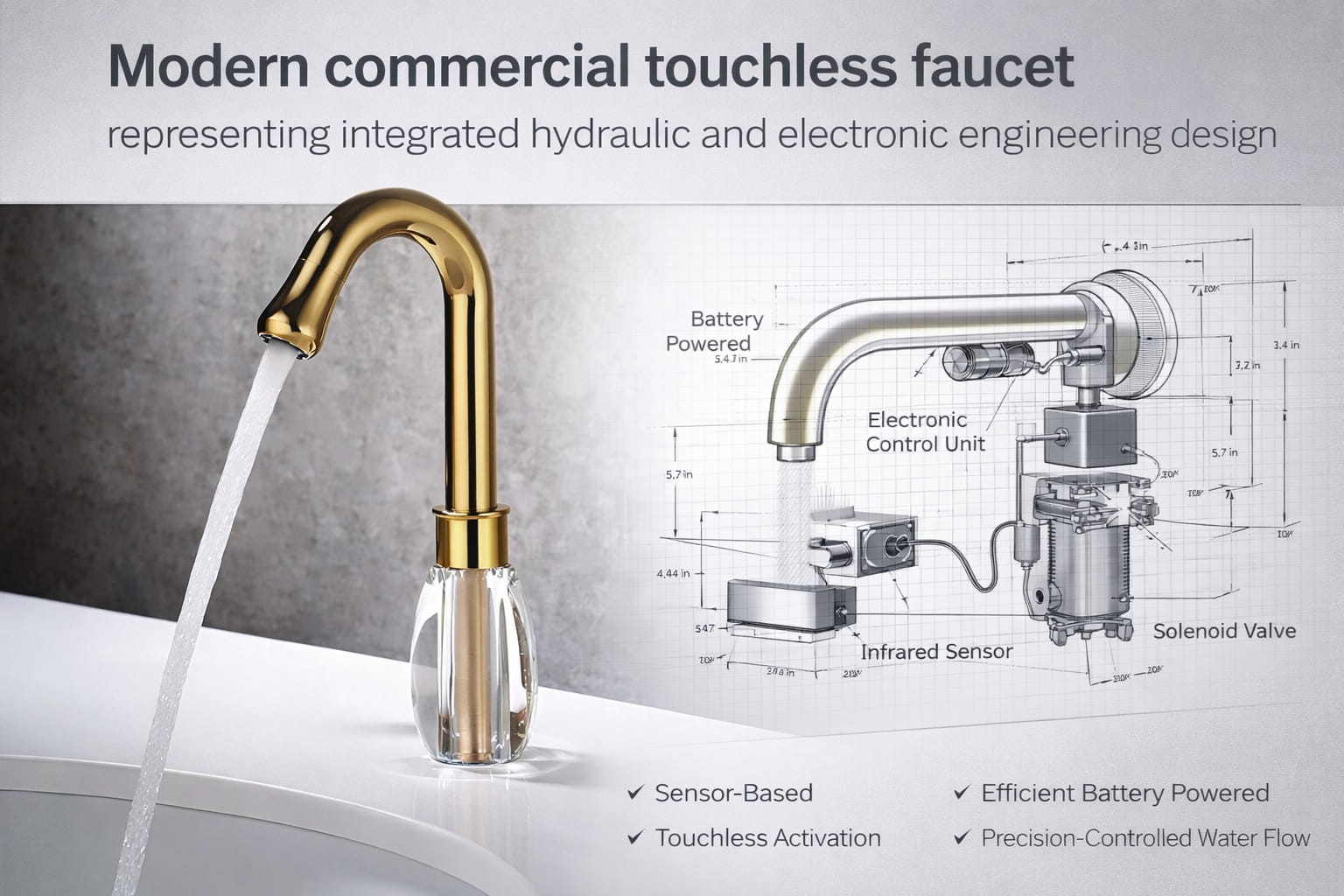
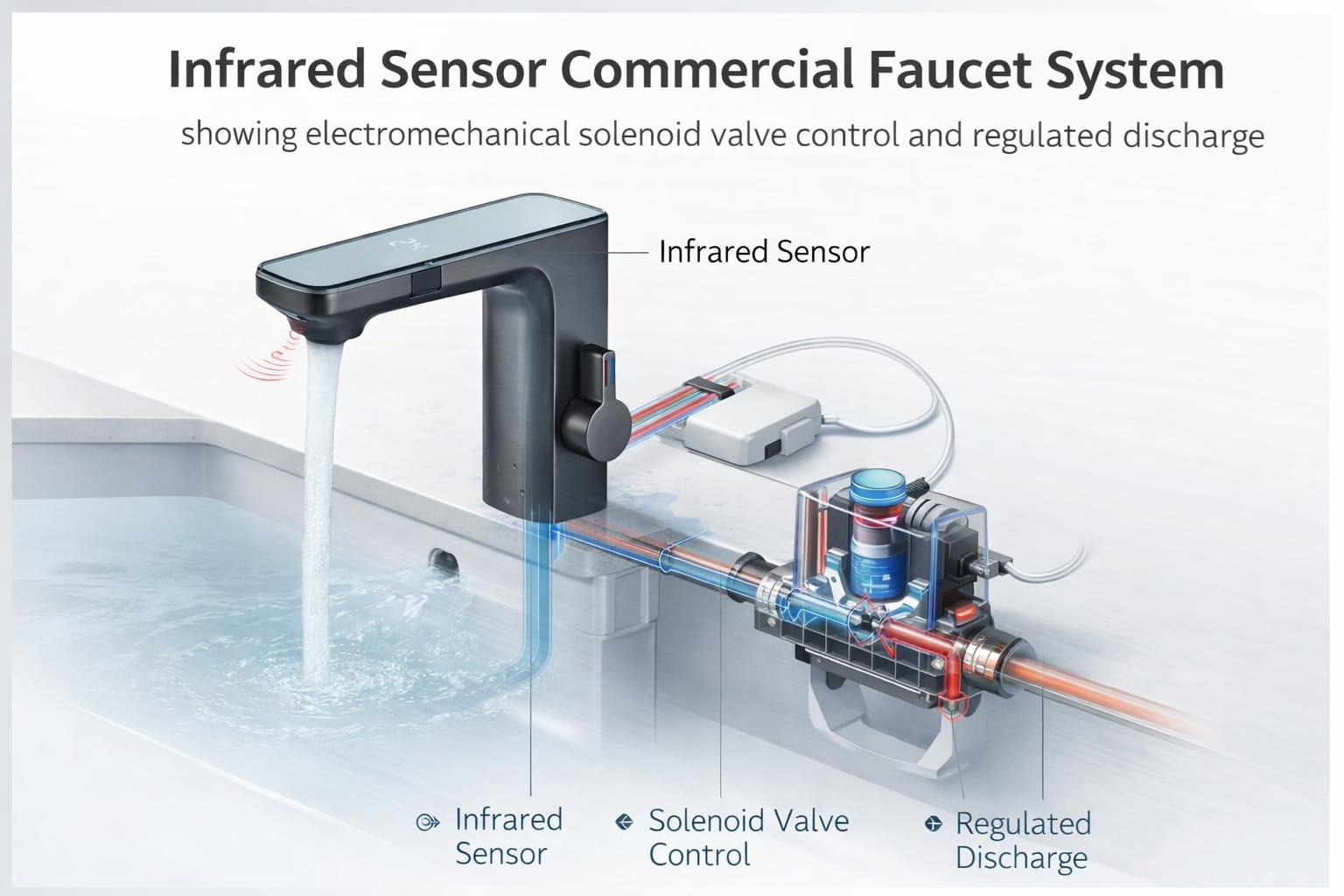
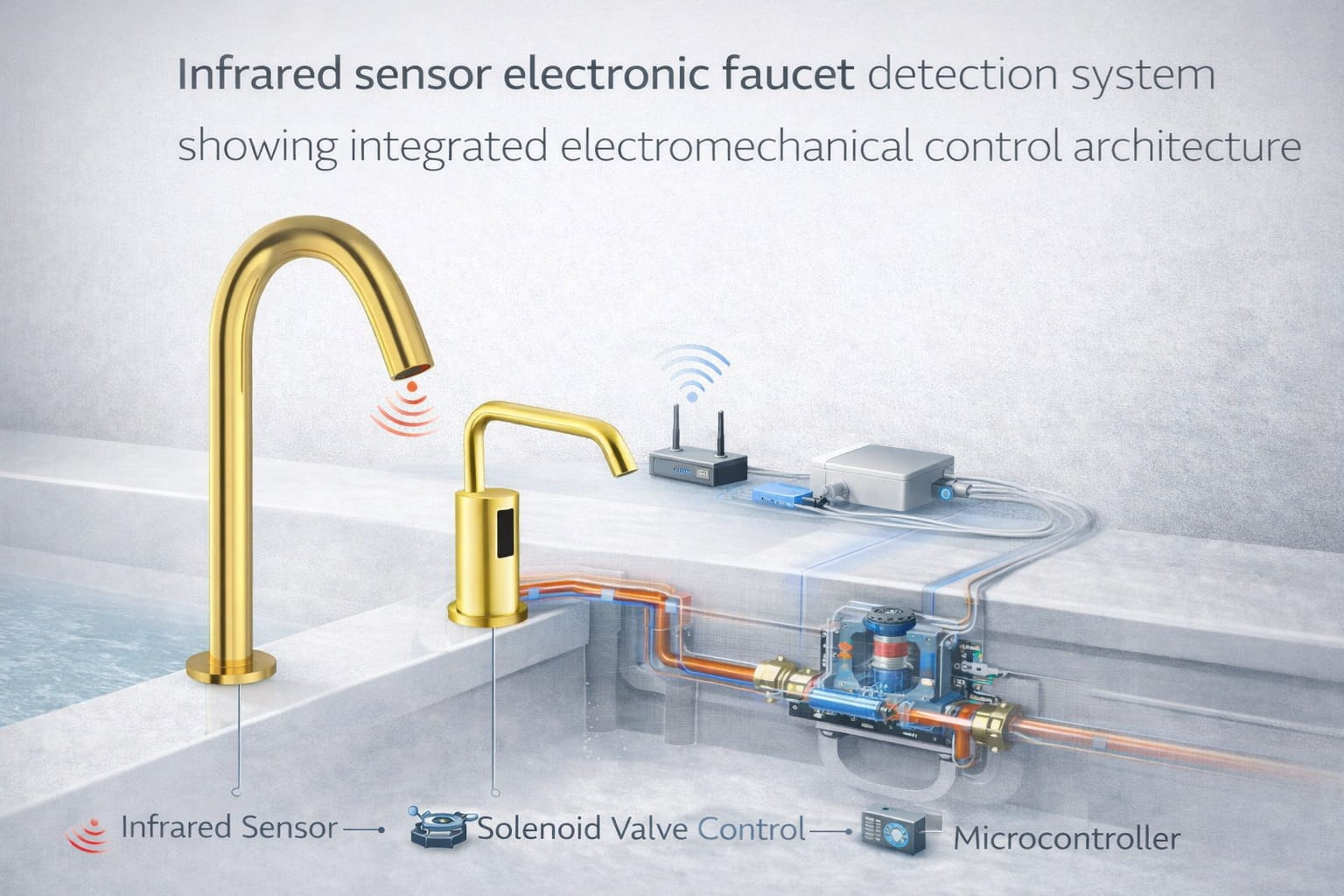
Infrared detection systems operate using active emission and reflected signal capture to identify hand presence within calibrated detection zones. Signal intensity follows inverse-square distance relationships and is processed through amplification, filtering, and microcontroller decision logic. These systems enable precise activation timing, minimizing water waste while maintaining reliable user response performance in high-traffic environments.
American Standard Selectronic Sensor Engineering
Solenoid Valve and Electromechanical Flow Control
Electromagnetic Actuation Mechanisms
Solenoid valves use electromagnetic force generated by energized coils to displace ferromagnetic plungers, opening or closing flow pathways. Force magnitude depends on coil current, winding density, magnetic permeability, and air gap geometry. These systems enable rapid activation with response times typically below 100 milliseconds.
Moen M-Power Solenoid Engineering
Hydraulic Regulation and Pressure Compensation
Pressure-compensating regulators dynamically adjust orifice geometry using elastomeric membranes to maintain constant discharge rates across wide supply pressure variations. This stabilizes hydraulic output and ensures compliance with conservation standards regardless of upstream system conditions.
Delta Pressure Compensation Technology
Valve Lifecycle and Reliability Engineering
Commercial solenoid valves are engineered for operational lifecycles exceeding one million actuation cycles. Reliability engineering incorporates fatigue analysis, thermal management, and material selection to ensure consistent performance under extreme duty cycles common in transportation hubs, hospitals, and commercial infrastructure.
Kohler Lifecycle Testing and Validation
Materials Science and Metallurgical Engineering
Forged Brass Alloys and Structural Integrity
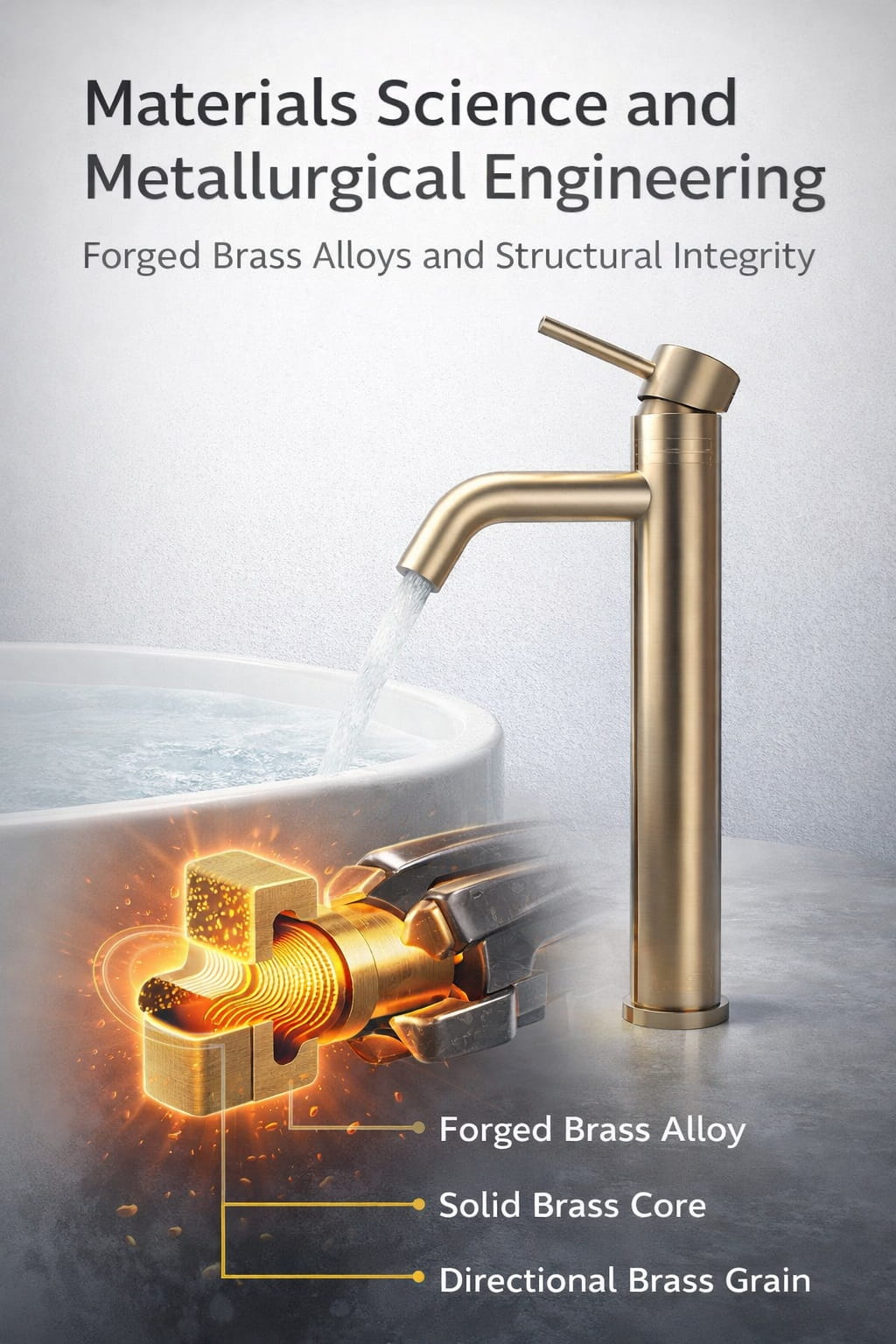
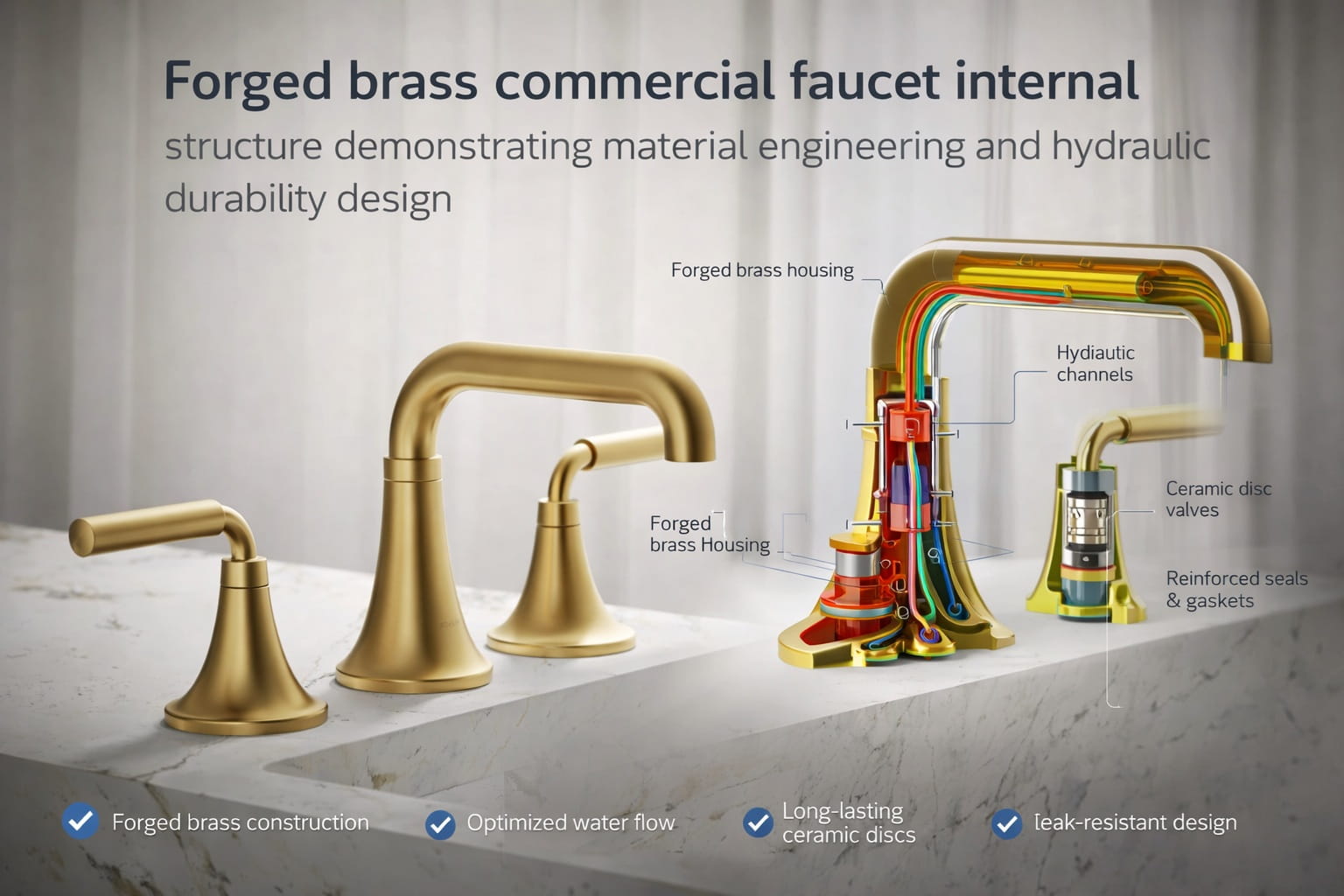
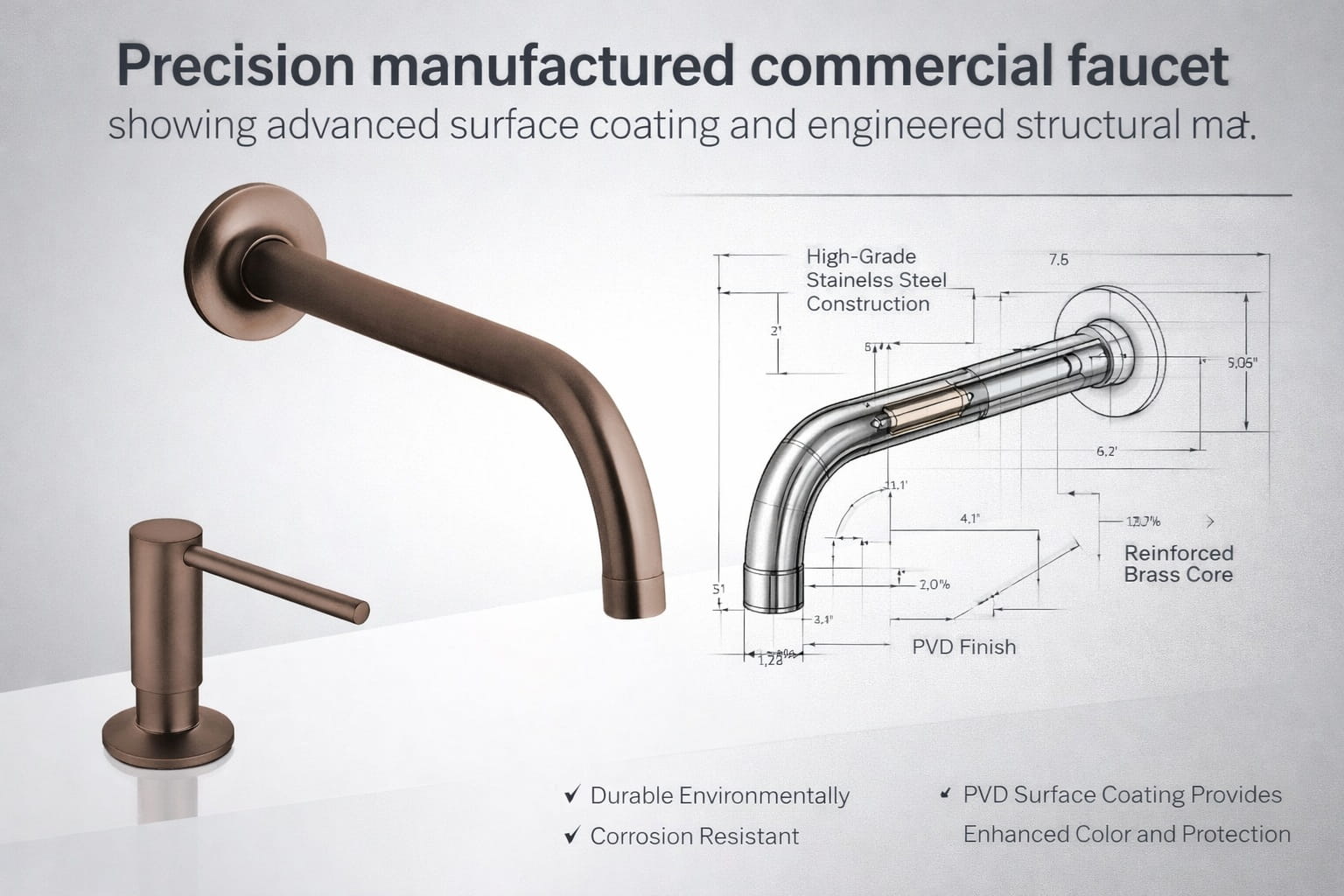
Commercial faucet bodies are typically manufactured using forged brass alloys such as C37700, selected for their optimal balance of strength, machinability, and corrosion resistance. Forging improves grain structure alignment, increasing fatigue resistance and structural durability under repeated mechanical loading and hydraulic pressure fluctuations. These alloys maintain mechanical stability under pressures exceeding 125 psi and support long-term dimensional stability.
NSF Lead Compliance and Brass Material Standards
Stainless Steel and Corrosion Resistance Engineering
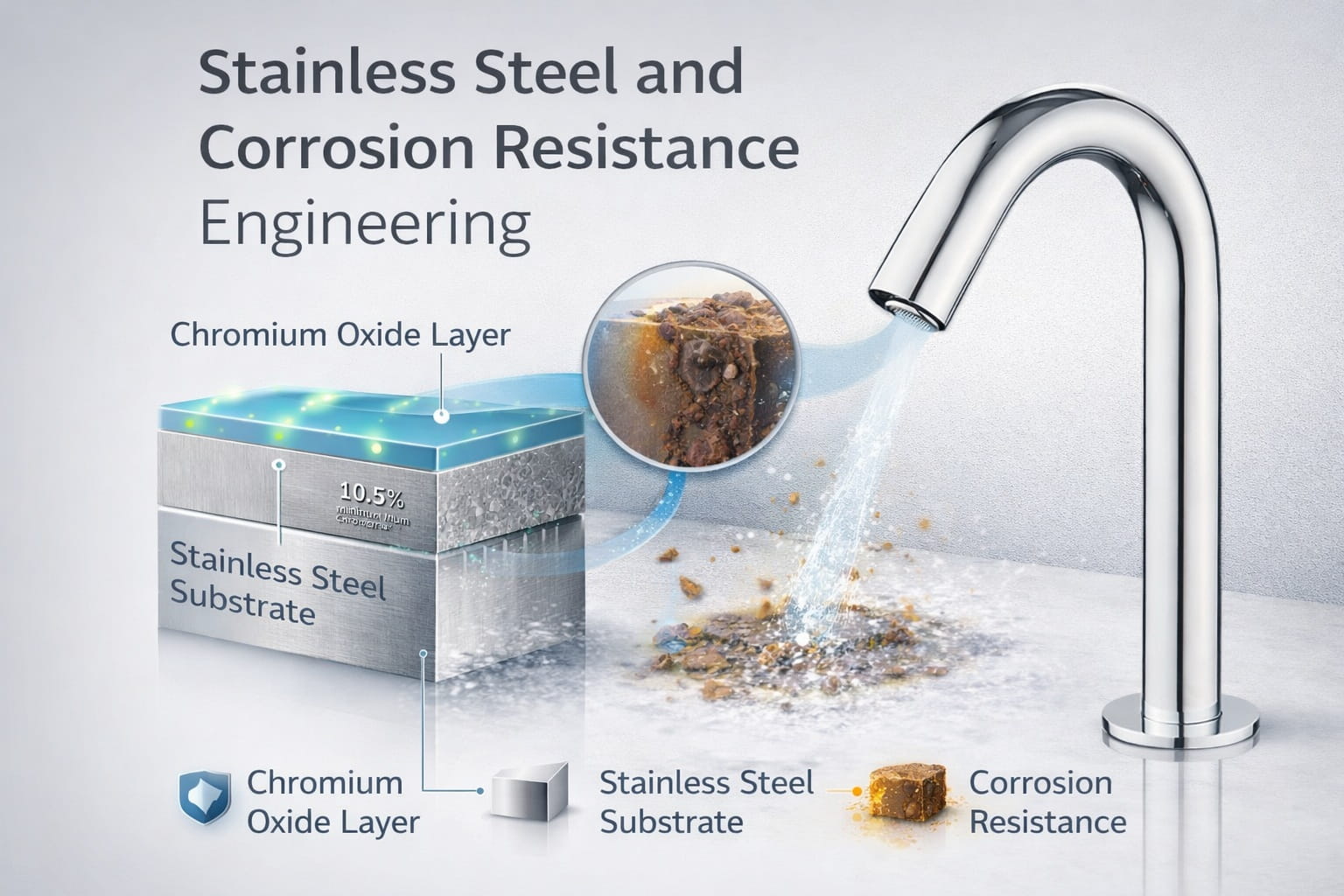
Stainless steel grades such as 304 and 316 provide superior resistance to chloride-induced corrosion, making them ideal for healthcare, transportation, and coastal infrastructure environments. Chromium oxide surface passivation creates a self-healing protective layer that prevents oxidation and structural degradation under prolonged moisture and chemical exposure conditions.
American Standard Stainless Commercial Faucet Systems
Failure Modes and Maintenance Engineering
Solenoid Fatigue and Thermal Degradation
Repeated electromagnetic activation generates thermal loads that degrade insulation materials and increase electrical resistance. This thermal accumulation can reduce actuation efficiency and eventually cause coil failure. Proper thermal management and material selection significantly extend operational lifespan.
Moen Solenoid System Engineering
Mineral Deposition and Flow Restriction
Hard water environments introduce calcium carbonate deposition within aerators and flow regulators. Mineral accumulation reduces effective discharge diameter, increasing hydraulic resistance and reducing flow performance. Routine maintenance and filtration systems mitigate this degradation mechanism.
BathSelect Commercial Aerator Engineering
Seal Degradation and Leakage Mechanisms
Elastomer seals experience compression relaxation, thermal expansion, and chemical exposure that gradually reduce sealing force. This degradation allows leakage across sealing interfaces and reduces hydraulic efficiency. Advanced elastomer compounds improve resistance to these failure modes.
Kohler Cartridge and Seal Engineering
Surface Engineering and Physical Vapor Deposition Coatings
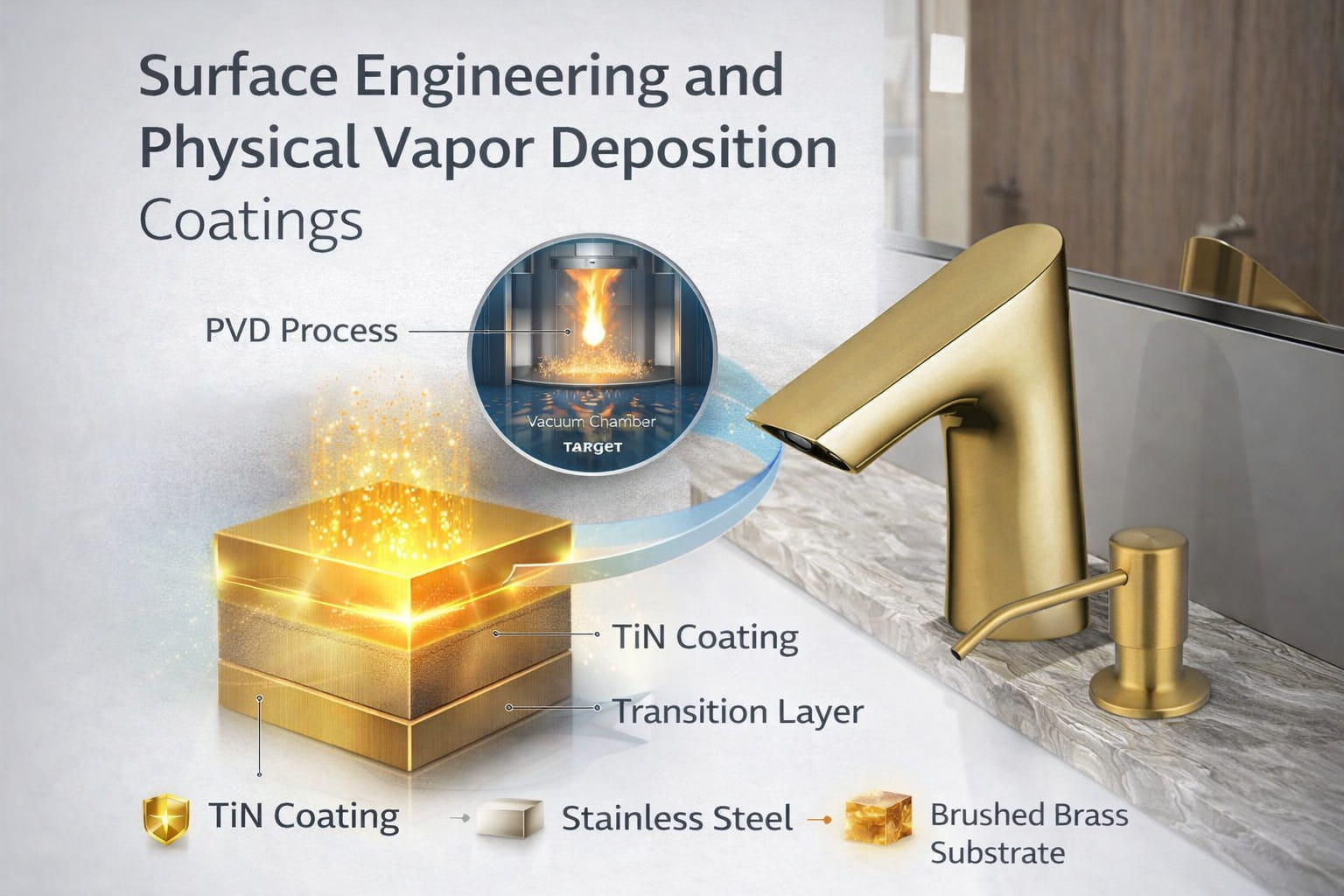
Physical Vapor Deposition coatings provide exceptional surface durability by depositing ultra-hard metallic compounds such as titanium nitride onto faucet surfaces. These coatings improve scratch resistance, corrosion protection, and long-term aesthetic stability. PVD coatings significantly outperform traditional electroplated finishes in commercial applications.
Commercial PVD Faucet Coating Engineering
Reliability Engineering and Lifecycle Analysis
Weibull Reliability Modeling and Lifecycle Prediction
Weibull statistical analysis enables prediction of component failure probability based on operational cycle counts and material fatigue characteristics. This modeling allows manufacturers to optimize component design, predict maintenance intervals, and improve long-term system reliability.
Kohler Reliability Engineering Testing
Lifecycle Testing and Performance Validation
Commercial faucet lifecycle testing simulates years of operational use within controlled laboratory environments. Testing includes high-cycle activation, thermal exposure, pressure fluctuation, and environmental stress testing to validate product durability and performance reliability.
Delta Commercial Faucet Testing and Validation
Commercial Plumbing Infrastructure and System Integration

Hydraulic Distribution Networks and Pressure Zoning
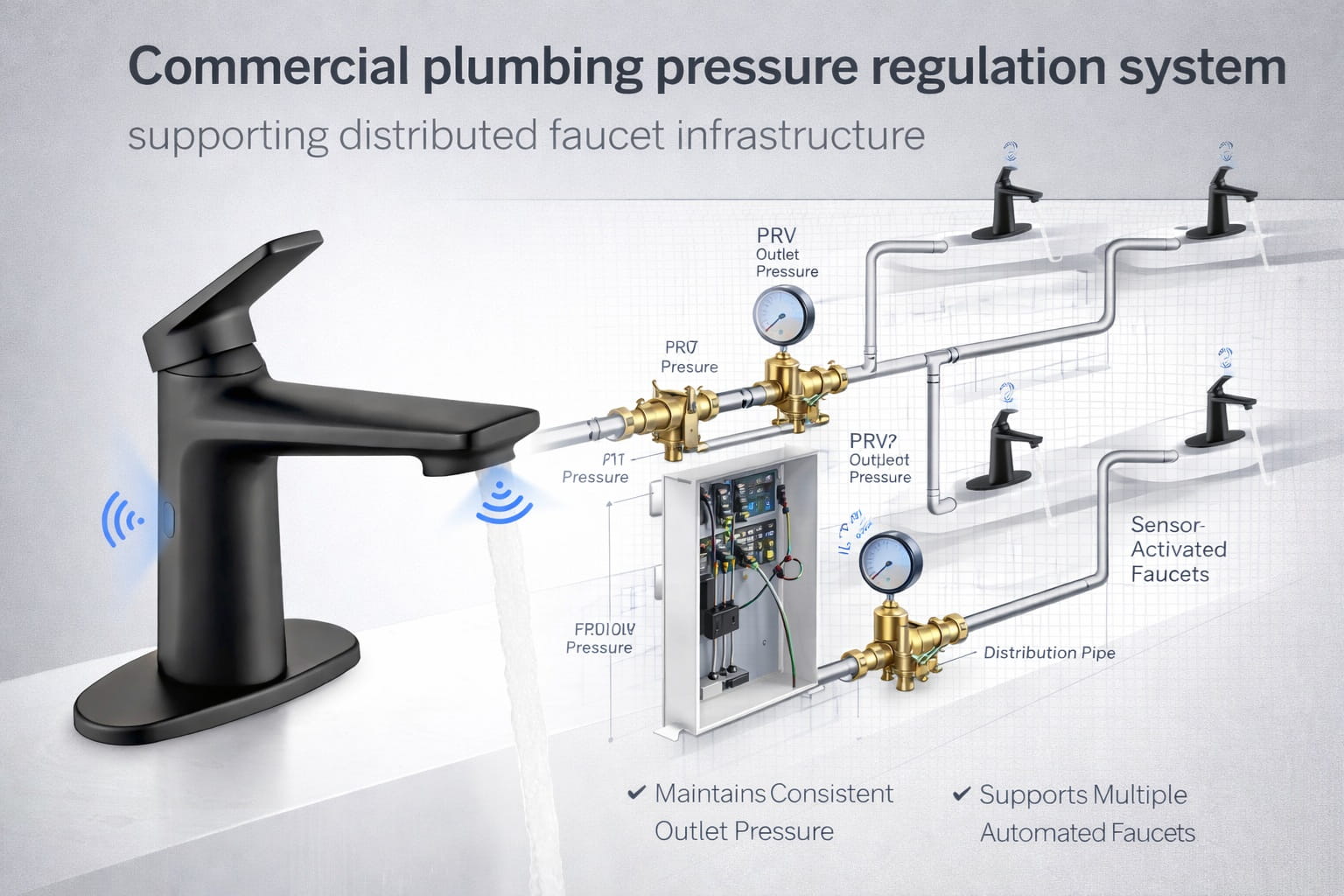
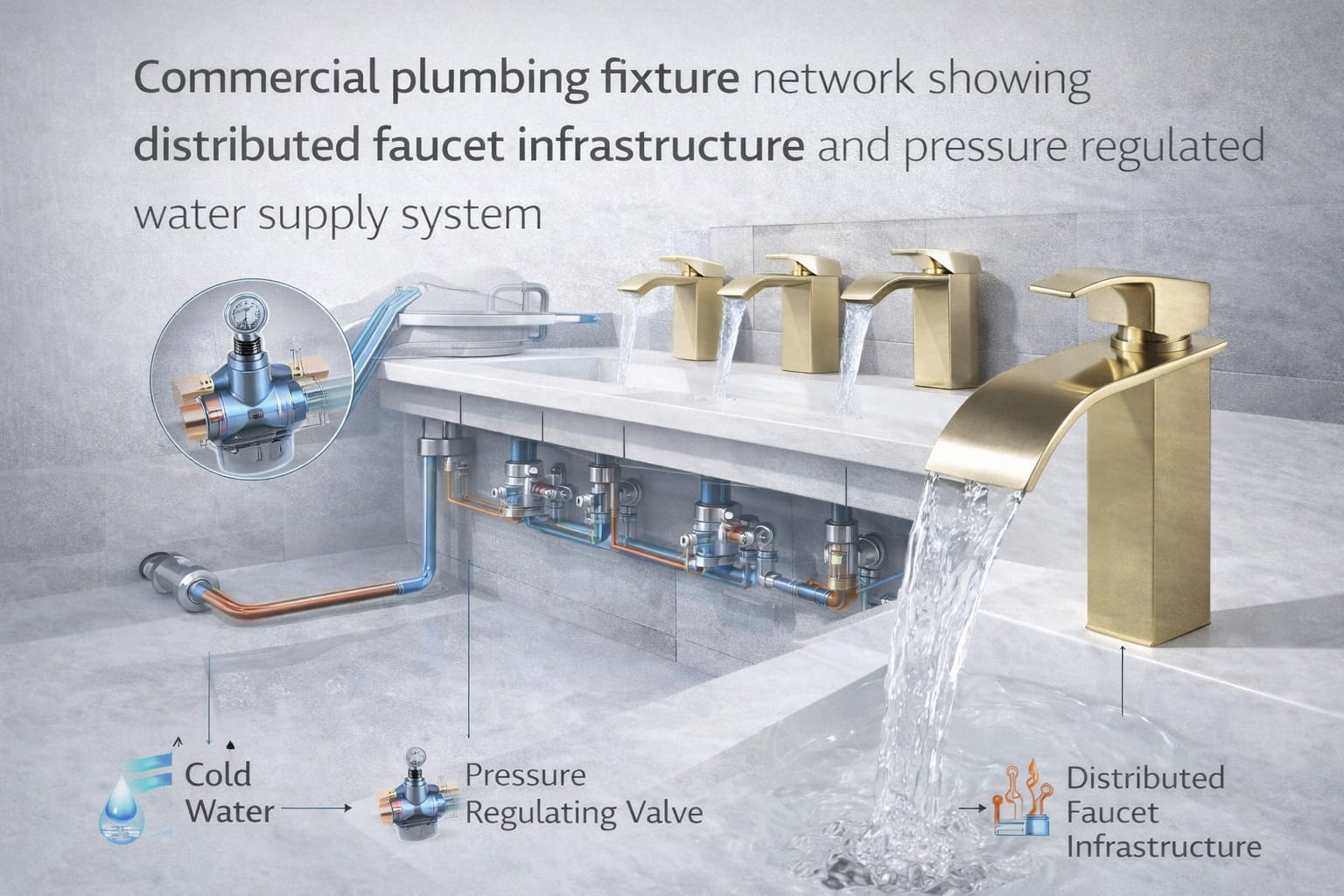
Commercial plumbing systems distribute water through engineered pressure zones designed to maintain hydraulic stability across vertical and horizontal infrastructure. Pressure reducing valves regulate hydrostatic pressure, preventing excessive loading on downstream fixtures while ensuring adequate discharge performance across all operational conditions.
Pressure Reducing Valve Engineering and Infrastructure Control
Hydraulic Transients and Water Hammer Engineering
Transient Pressure Surge Generation
Rapid valve closure creates pressure shock waves that propagate through plumbing systems at high velocities. These transient pressure surges can exceed normal operating pressure by several multiples, placing extreme stress on faucet internal components and piping infrastructure.
Water Hammer Arrestor Engineering Solutions
Shock Mitigation and Arrestor Systems
Water hammer arrestors absorb transient pressure energy using compressible air chambers and sealed pistons. These systems protect faucet cartridges, solenoid valves, and piping systems from fatigue failure and structural damage caused by repeated hydraulic shock loading.
Commercial Plumbing Installation and Protection Engineering
Control Systems and Automation Engineering
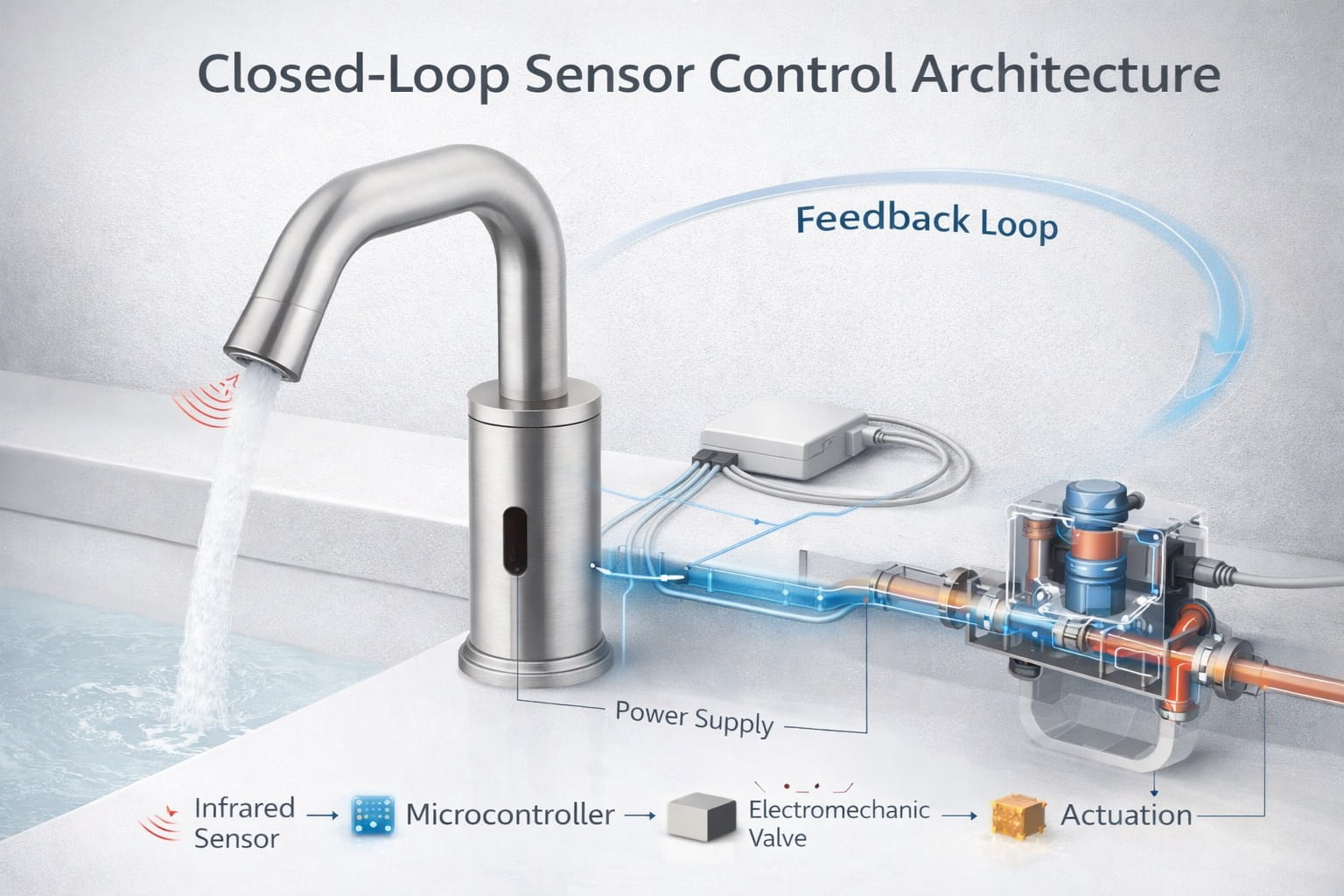
Closed-Loop Sensor Control Architecture
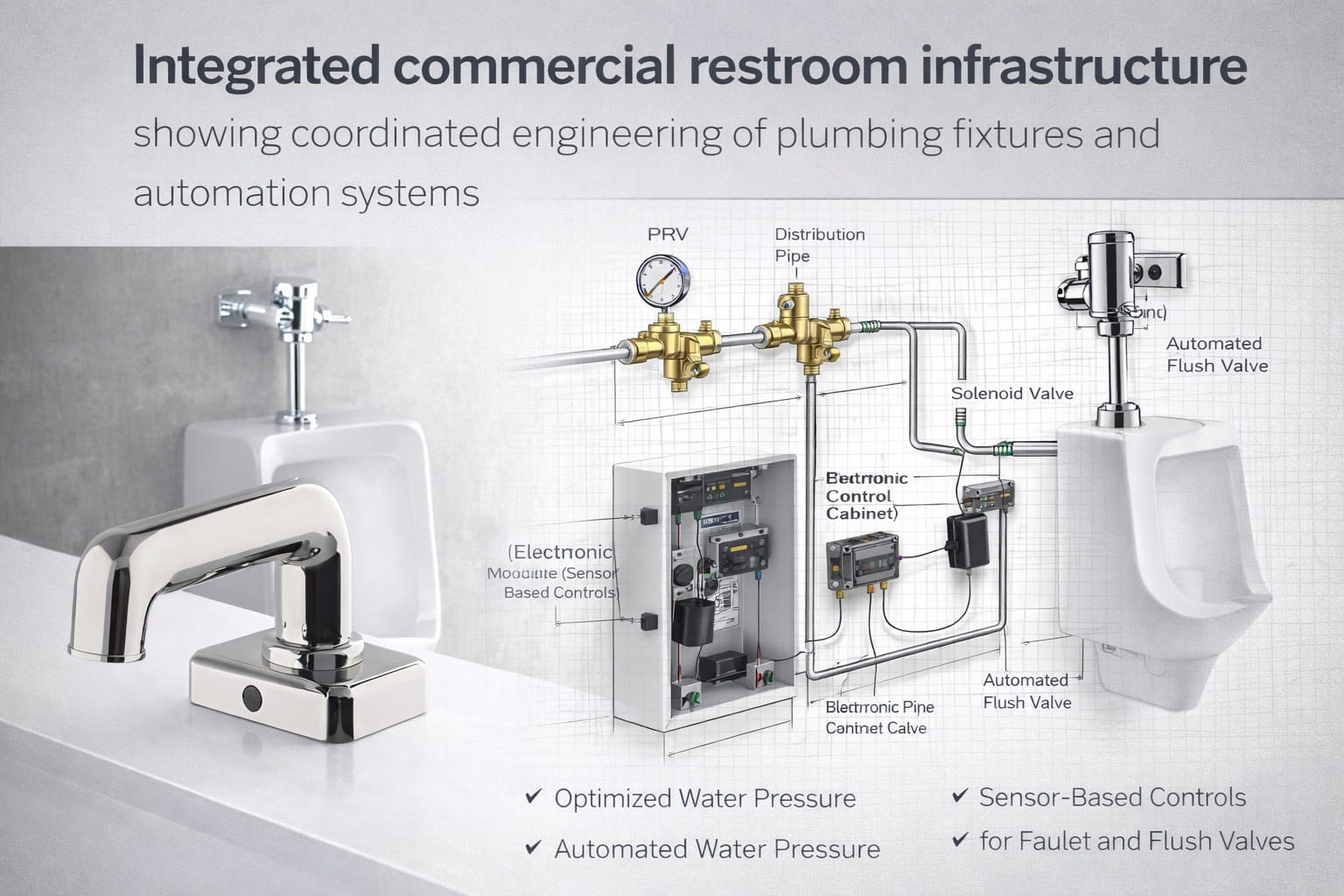
Automatic faucets function as closed-loop electromechanical control systems integrating sensors, microcontrollers, and solenoid actuators. Sensor inputs are processed in real time, allowing precise flow activation and termination based on environmental interaction, optimizing efficiency and performance reliability.
Moen Electronic Faucet Control Systems
Building Automation System Integration and Smart Infrastructure
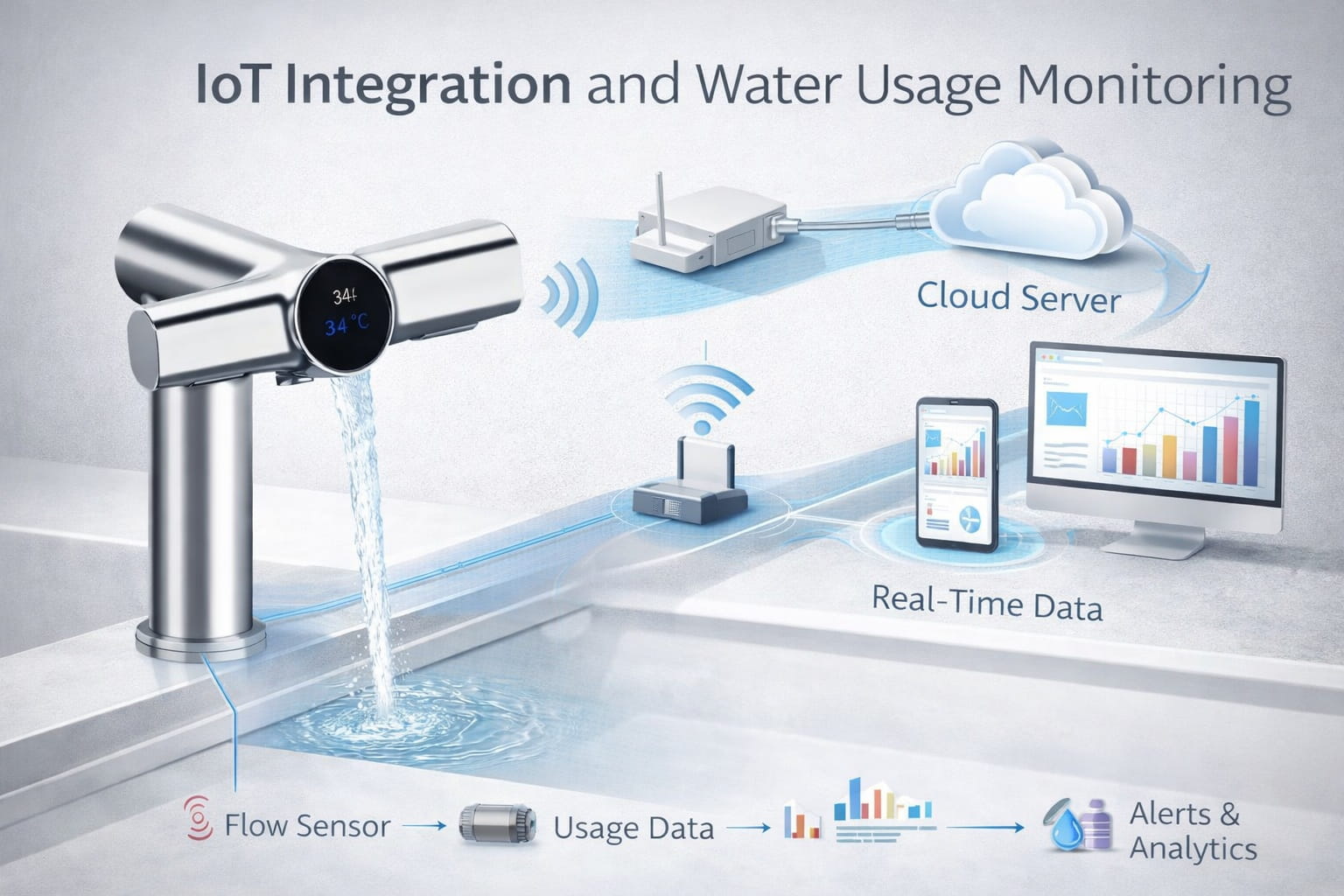
IoT Integration and Water Usage Monitoring
Modern commercial faucet systems integrate with building automation systems using digital communication protocols. These systems enable real-time monitoring of water consumption, predictive maintenance scheduling, and infrastructure performance optimization across large commercial facilities.
ASHRAE Building Automation and Infrastructure Engineering
Manufacturing Engineering and Precision Fabrication
Forging and Structural Forming Processes
Forging processes shape brass materials under high pressure, improving structural density and mechanical strength. This manufacturing method enhances fatigue resistance and ensures dimensional stability under long-term operational loads.
Delta Faucet Manufacturing and Design Engineering
CNC Machining and Precision Engineering
Computer numerical control machining produces highly precise internal geometries essential for hydraulic performance. Precision tolerances ensure proper sealing, flow regulation, and long-term reliability of internal faucet components.
Kohler Precision Manufacturing and Quality Control
Surface Finishing and Durability Enhancement
Surface finishing processes such as polishing, electroplating, and PVD coating improve corrosion resistance, durability, and visual quality. These finishing processes protect underlying materials from environmental exposure and mechanical wear.
Commercial Faucet Surface Engineering and Coating Systems
Engineering Conclusion: Fully Integrated Electromechanical Hydraulic Systems
Commercial faucets represent sophisticated electromechanical hydraulic systems operating within complex infrastructure environments. Their performance depends on the integration of fluid mechanics, materials engineering, electronic control systems, manufacturing precision, and infrastructure compatibility. Proper engineering design, installation, and maintenance ensure reliable long-term operation within high-demand commercial environments.
EPA WaterSense Engineering and Efficiency Standards
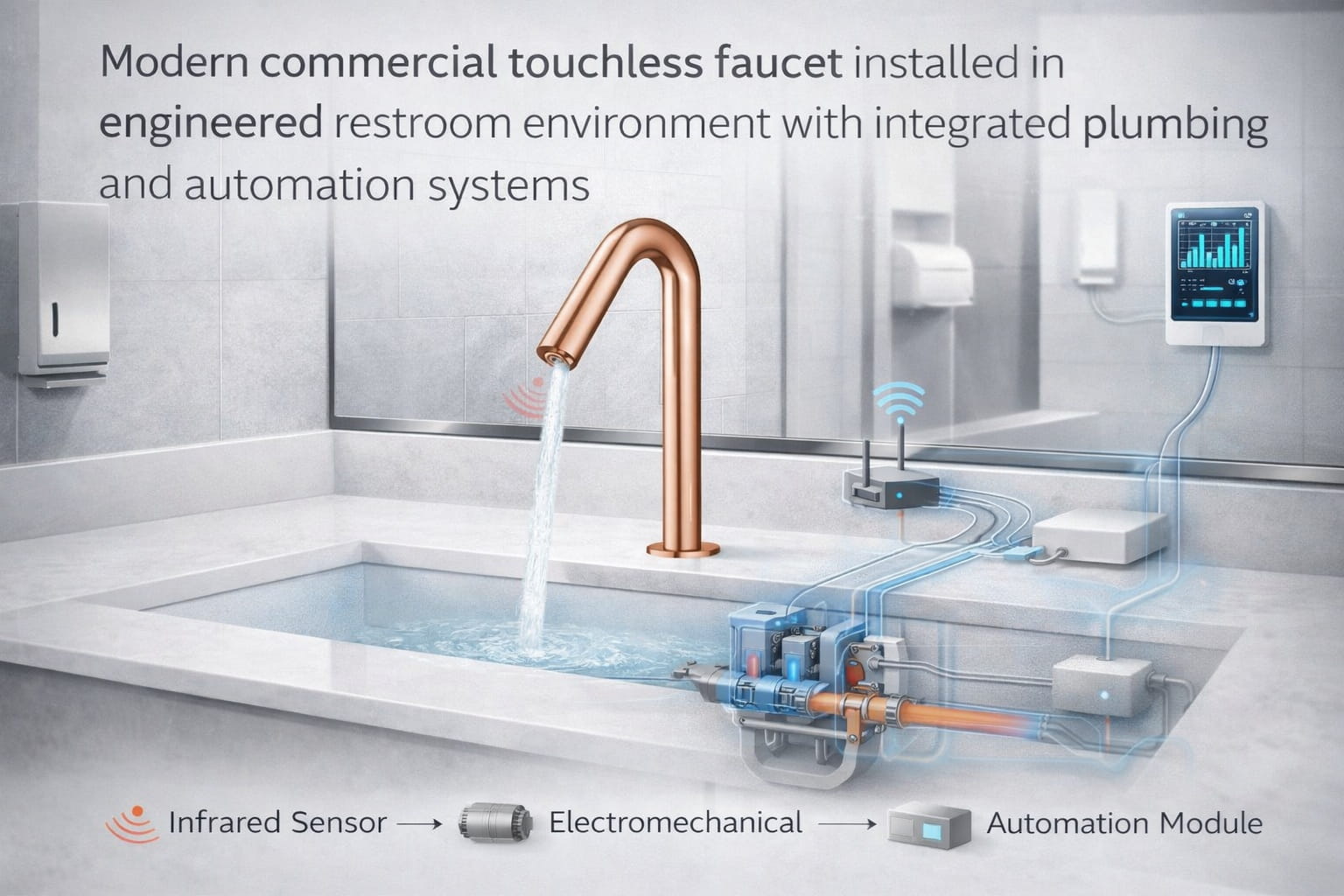
Engineering Conclusion — Integrated Electromechanical and Hydraulic Architecture of Commercial Faucet Systems
Commercial faucets represent terminal control elements within engineered plumbing networks, integrating hydraulic regulation, electronic sensing, material durability, thermodynamic stability, and infrastructure coordination. Their operational reliability is defined not by individual components alone, but by the interaction between fluid mechanics, electromechanical actuation, infrastructure load distribution, and long-term reliability engineering across high-demand commercial environments.
Commercial Water Efficiency and Engineering Standards
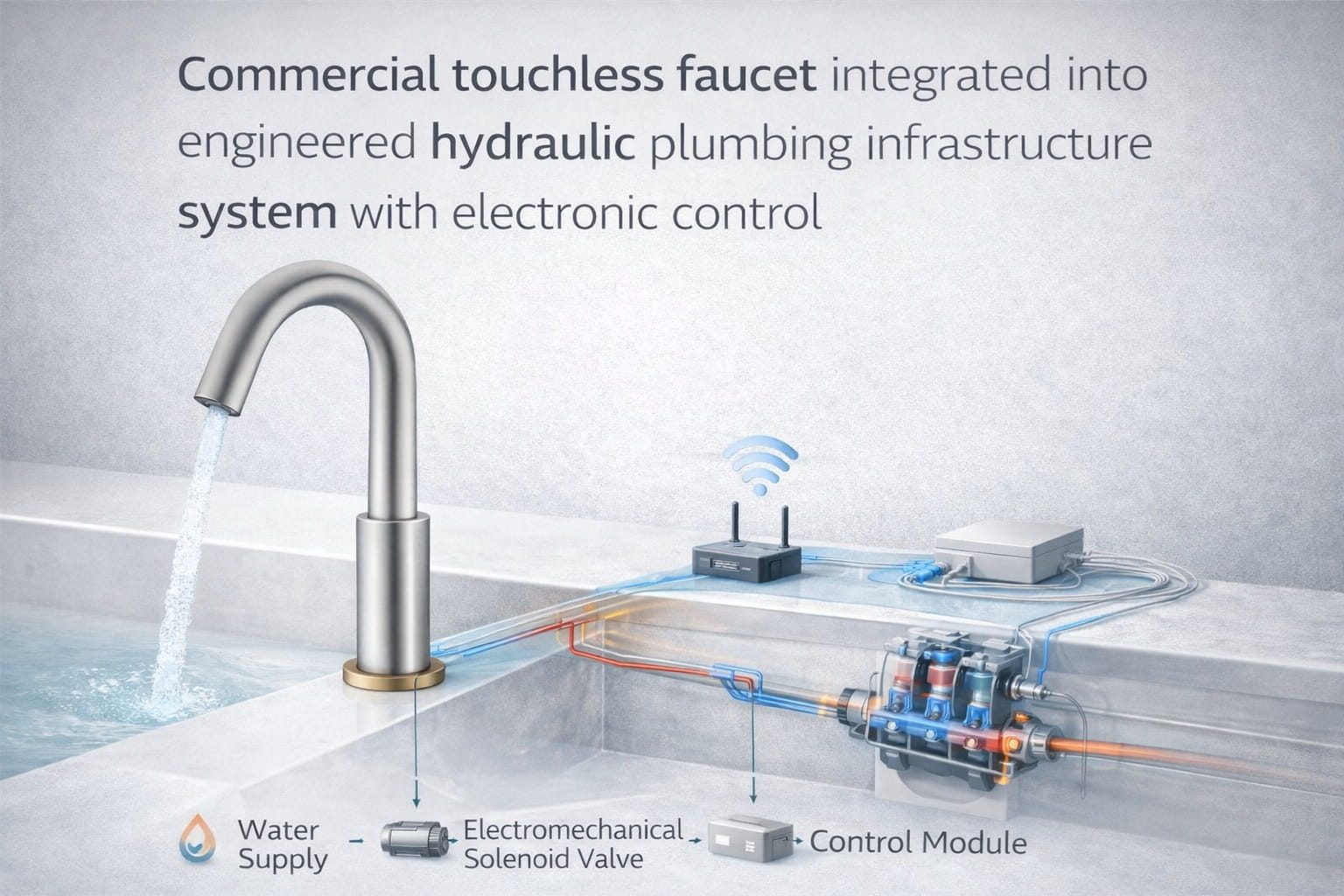
Hydraulic Performance and Infrastructure Integration
Commercial faucets operate as distributed hydraulic regulators governing water discharge at terminal points within pressurized plumbing systems. Their performance depends on upstream infrastructure design, pressure regulation mechanisms, probabilistic demand modeling, and system-wide load stability. Fixture unit analysis, hydraulic zoning, and pressure control ensure reliable operation across high-traffic environments with stochastic demand characteristics.
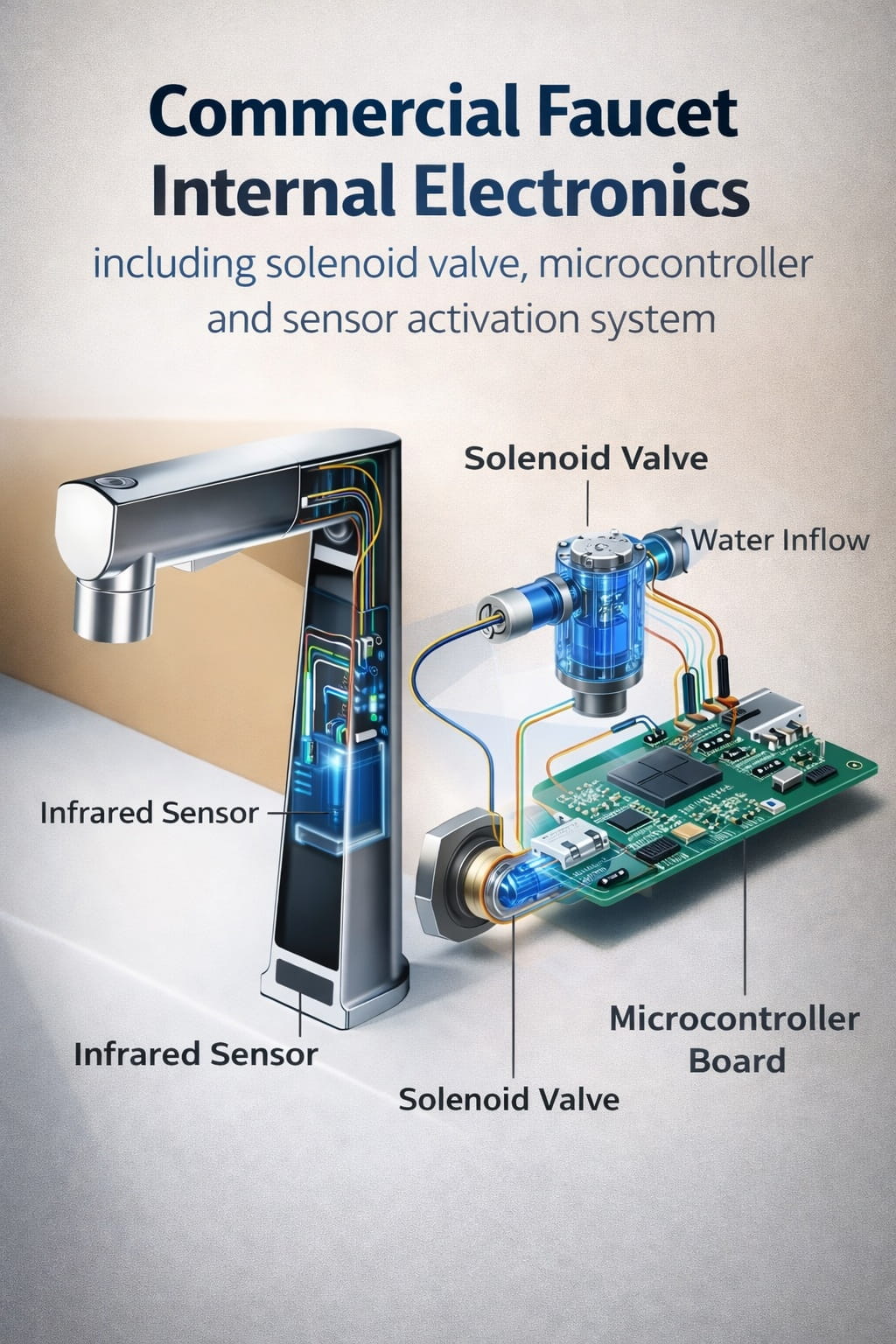
Electronic Control, Sensor Systems, and Electromechanical Reliability
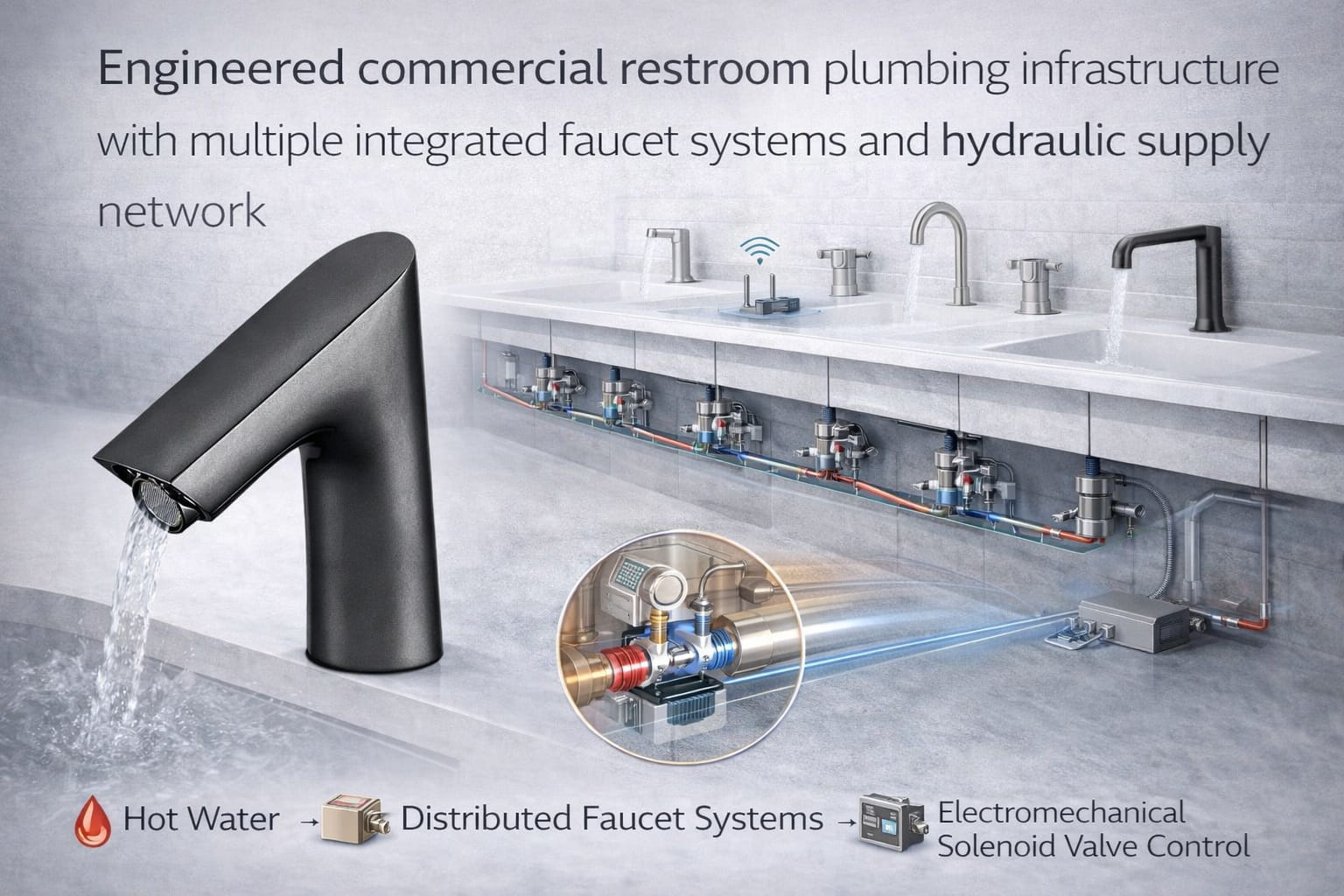
Infrared sensors, signal processing electronics, and solenoid actuators transform commercial faucets into closed-loop electromechanical control systems. These systems enable autonomous activation, precise flow control, and efficient water usage. Reliability depends on electronic component durability, electromagnetic actuation stability, and integration with building electrical infrastructure and power systems.
Material Engineering, Structural Durability, and Manufacturing Precision
Forged brass alloys, stainless steel assemblies, engineered elastomers, and advanced surface coatings provide structural integrity, corrosion resistance, and lifecycle durability. Precision manufacturing processes—including forging, machining, and surface finishing—ensure dimensional accuracy and long-term hydraulic sealing reliability across millions of operational cycles.
Multidisciplinary Engineering Integration and Infrastructure Coordination
Commercial faucet systems represent the convergence of hydraulic engineering, materials science, electronic control systems, thermodynamic stability, and infrastructure integration. Their performance depends on coordinated interaction between plumbing infrastructure, electronic control architecture, structural materials, and probabilistic demand environments. Proper engineering design, installation, and infrastructure integration ensure reliable, efficient, and sustainable operation across complex commercial plumbing systems.
Building Systems Engineering and Infrastructure Integration Standards