
Commercial Faucet Materials: Solid Brass vs. Stainless Steel vs. Zinc — Durability, Corrosion & Lifecycle Engineering
The exterior finish is only skin-deep. Chrome, brushed nickel, gold and matte black can all be applied over different base materials, and those underlying materials determine structural strength, corrosion behavior, repairability and long-term commercial durability. This guide compares brass, stainless steel and zinc-based construction from an AEC and facility-management perspective.
Do Not Confuse Material With Finish
Widely used in commercial faucet bodies because it machines, casts and plates well while providing excellent structural durability.
Highly corrosion-resistant and inherently silver-toned; particularly compelling where exposed metal and lead-free material composition matter.
Lower-cost and easy to cast, but generally less desirable as the primary structural body for severe high-traffic commercial service.
Brass vs. Stainless vs. Zinc
| Engineering Factor | Solid / Cast Brass | 304 Stainless Steel | Zinc Alloy |
|---|---|---|---|
| Commercial durability | Excellent | Excellent | Application dependent |
| Corrosion resistance | Very good with correct alloy/finish | Excellent | Generally lower than premium brass/stainless |
| Machinability | Excellent | More difficult to machine | Excellent for die casting |
| Finish options | Extensive | Natural brushed/polished appearance plus coatings | Usually plated/coated |
| High-traffic specification | Strong choice | Strong choice | Review carefully |
| First-cost pressure | Moderate | Often higher | Often lower |
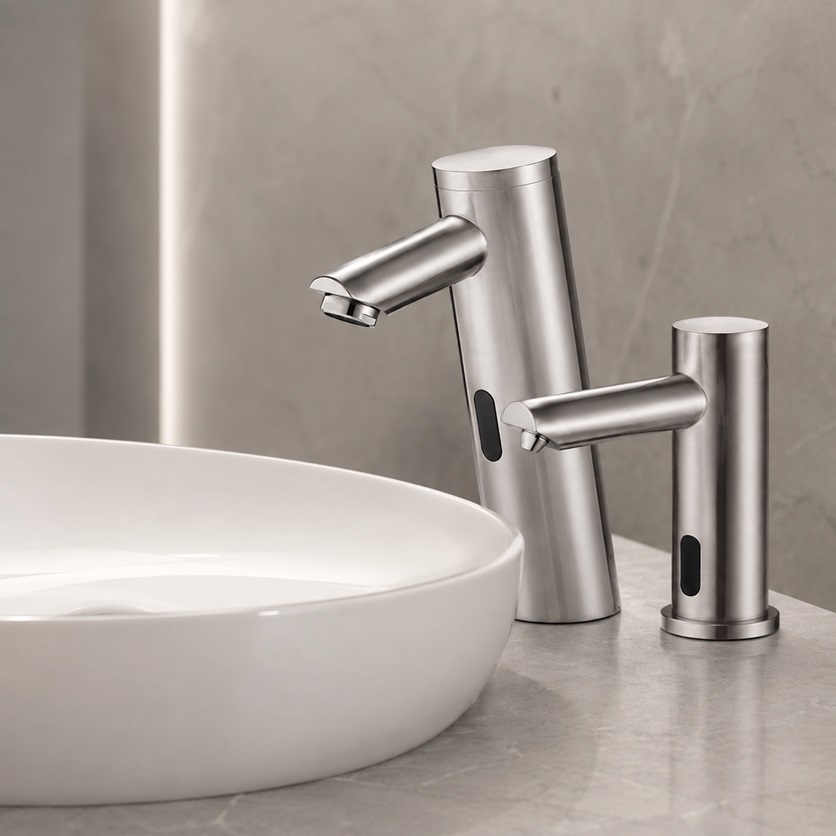
Fontana Milan Solid Brass Commercial Brushed Nickel Sensor Faucet
The Fontana Milan Solid Brass Commercial Sensor Faucet is a clear example of the difference between substrate and appearance: its brushed-nickel exterior is the finish, while the structural faucet body is specified as solid brass.
Fontana also identifies the platform for public restrooms, office buildings, healthcare and other commercial applications, where repeated sensing cycles and cleaning exposure make base-metal quality important.
Solid-brass construction provides structural mass and long-term commercial durability.
Cleaning chemistry must remain compatible with the brushed-nickel surface treatment.
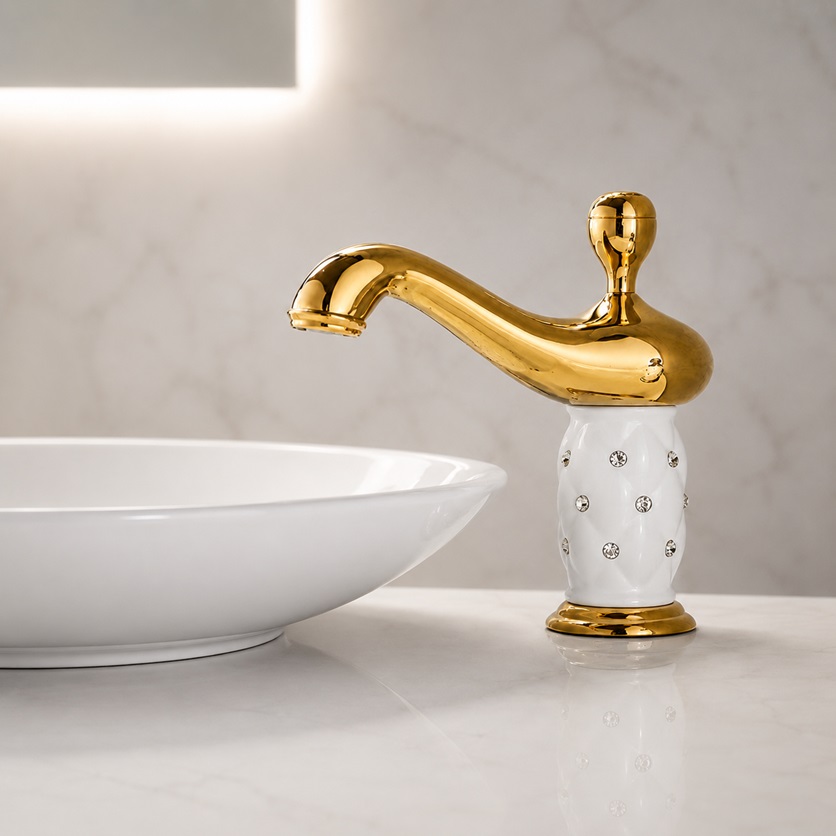
BathSelect Genie White & Gold Commercial Automatic Touchless Sensor Faucet
BathSelect’s Genie platform also uses solid-brass construction beneath its decorative white-and-gold finish. That is significant in design-led commercial restrooms because a highly decorative exterior does not necessarily require sacrificing commercial-grade structural material.
Premium architectural finish over a vandal-resistant brass body.
Facilities should receive approved finish-cleaning instructions during handover.
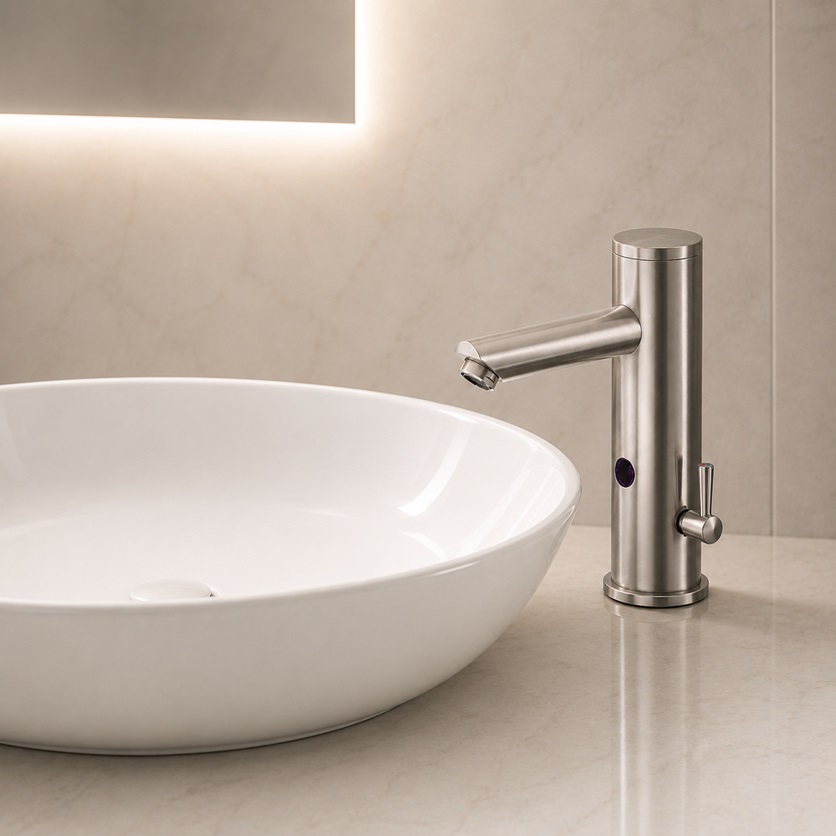
Bestware SUS304 Stainless Steel Commercial Sensor Faucet
Bestware provides the strongest material contrast in this review. The manufacturer specifies the body as 100% food-grade 304 stainless steel, rather than plated brass.
Stainless steel is attractive where corrosion resistance, material transparency and an inherently metallic finish are priorities. It can, however, be more difficult and expensive to machine than brass.
304 stainless offers excellent corrosion and oxidation resistance without relying on brass substrate.
Confirm stainless grade rather than accepting the vague description “stainless finish.”
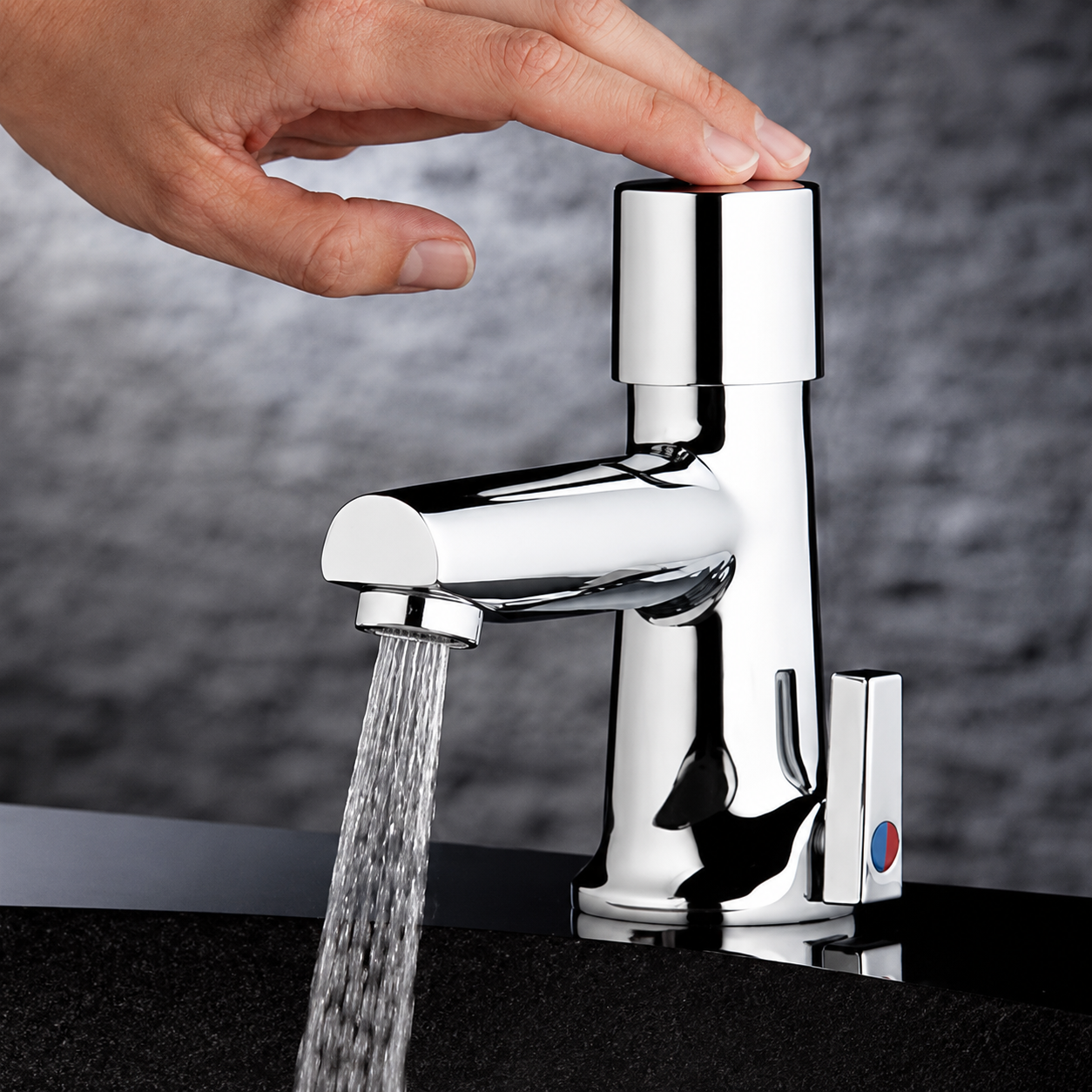
Chicago Faucets E-Tronic® 80 Commercial Touchless Faucet
Chicago Faucets illustrates another important specification concept: brass alloy composition matters. The current E-Tronic 80 specification uses ECAST cast-brass construction with total lead content stated at no more than 0.25% by weighted average.
That is more useful specification language than simply writing “metal faucet body.”
Clearly documented low-lead cast-brass commercial construction.
Confirm compliance on the exact selected model/configuration.
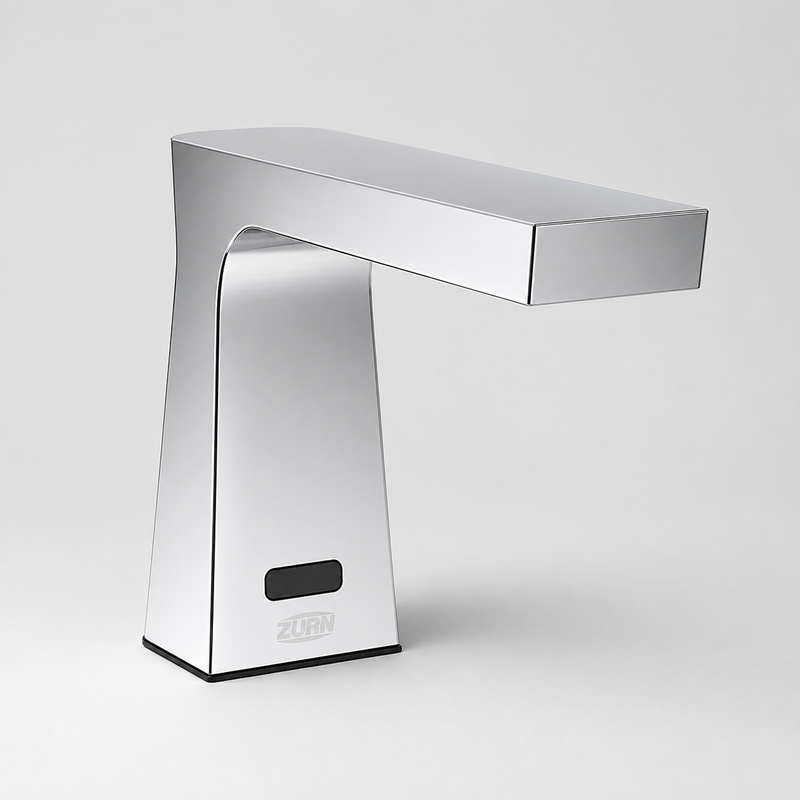
Zurn Camaya Series® ZG6953 Commercial Sensor Faucet
Zurn adds another consideration: material durability must be evaluated with the internal mechanical architecture. The current Camaya platform combines specification-grade commercial construction with a gear-driven ceramic cartridge intended to improve resistance to debris and buildup.
A durable body is valuable, but lifecycle performance still depends on what sits inside that body.
Commercial exterior architecture paired with durable ceramic water-control technology.
Verify lead-law and certification compliance for the exact option combination.
Where Does Zinc Fit?
Zinc alloys are useful manufacturing materials. They cast easily, support complex shapes and can reduce first cost. That does not automatically make zinc “bad.”
The issue is where the zinc is used. A decorative lever, cover or non-critical component presents a different lifecycle question from a primary pressure-bearing faucet body exposed continuously to water, cleaning chemicals and mechanical loading.
Material Alone Does Not Determine Corrosion Life
| Variable | Why It Matters |
|---|---|
| Water chemistry | Chlorides, pH and dissolved minerals influence wetted-component corrosion. |
| Cleaning chemicals | Acids, alkalis and abrasive cleaners can damage plated/coated surfaces. |
| Dissimilar metals | Poorly coordinated metals can create galvanic-corrosion conditions. |
| Surface damage | A damaged coating exposes the substrate beneath decorative finishes. |
| Moisture exposure | Commercial sink areas experience constant condensation and cleaning moisture. |
“Brass” Does Not Mean Old-Style High-Lead Brass
Modern potable-water fixtures sold for regulated applications must address current lead-content requirements. For example, Chicago Faucets’ ECAST specification states a weighted lead content of ≤0.25%, while Zurn publishes lead-law-compliant configuration options on current commercial platforms.
Architects should therefore specify the required certification and lead-compliance standard rather than rejecting brass merely because historic brass alloys sometimes contained much higher lead content.
Which Material Fits the Project?
| Project Condition | Recommended Direction |
|---|---|
| High-traffic public restroom | Commercial low-lead brass or 304 stainless |
| Premium decorative finish required | Brass provides exceptionally broad finish flexibility. |
| Strong corrosion/material transparency priority | 304 stainless steel deserves evaluation. |
| Low-cost decorative secondary component | Zinc alloy may be acceptable after engineering review. |
| Primary commercial pressure-bearing body | Avoid vague “metal” specifications; require exact alloy/material. |
Better Material Specifications
Weak: “Commercial chrome faucet.”
Better: “Commercial faucet with low-lead cast-brass body and chrome-plated exterior finish.”
Better stainless specification: “Commercial faucet body constructed from SUS304 / Type 304 stainless steel; manufacturer to identify wetted-material composition.”
Commercial Faucet Brands Related to Materials Engineering
Commercial Faucet Materials FAQ
Is brass better than stainless steel?
Neither universally wins. Brass offers excellent castability, machinability and finish flexibility, while 304 stainless offers excellent corrosion resistance and material transparency.
Is zinc alloy bad for faucets?
Not automatically. Its suitability depends on component location, alloy quality, coating, water exposure and expected service life.
Does brushed nickel mean the faucet is nickel?
No. Brushed nickel normally describes the exterior finish, while the underlying faucet may be brass, stainless steel or another material.
What stainless steel grade should architects look for?
Type 304/SUS304 is a common commercial corrosion-resistant stainless specification; verify the manufacturer’s exact material declaration.
Can solid brass corrode?
Yes. Brass is highly durable but not immune to aggressive water chemistry, dezincification conditions or incompatible cleaning chemicals.
What should submittals identify?
Base body material, wetted materials, finish system, lead compliance, certifications and material-specific care requirements.
Professional Sources
U.S. EPA — Lead in Drinking Water
Background on lead exposure and potable-water materials.
NSF/ANSI 61 — Drinking Water System Components
Health-effects framework for components contacting potable water.
NSF/ANSI/CAN 372 — Lead Content
Certification framework addressing lead content in drinking-water components.
American Society of Plumbing Engineers
Commercial plumbing engineering and material-selection resources.
International Code Council
Model plumbing-code resources relevant to commercial fixtures and potable-water systems.
Specify the Metal Beneath the Finish
For demanding commercial bathrooms, low-lead brass remains an exceptionally strong all-around faucet material because of its durability, machinability and finish flexibility. Type 304 stainless steel is a compelling alternative where corrosion resistance and stainless construction are design priorities. Zinc alloys can serve legitimate purposes, but primary high-traffic faucet bodies should not be selected from vague cost-driven material descriptions.
Review Fontana Milan Solid Brass Commercial Faucet →