
Why Plumbing Contractors Recommend Easy-to-Install Fontana Touchless Fixtures
Commercial plumbing contractors work within schedules that leave little room for avoidable field rework. Touchless faucet systems must coordinate with countertops, basins, water supplies, power pathways, sensor controls, shutoffs and finished architectural assemblies. Installation-friendly fixtures help reduce uncertainty by giving the project team a repeatable method for mounting, connecting, powering, testing and later servicing each wash station.
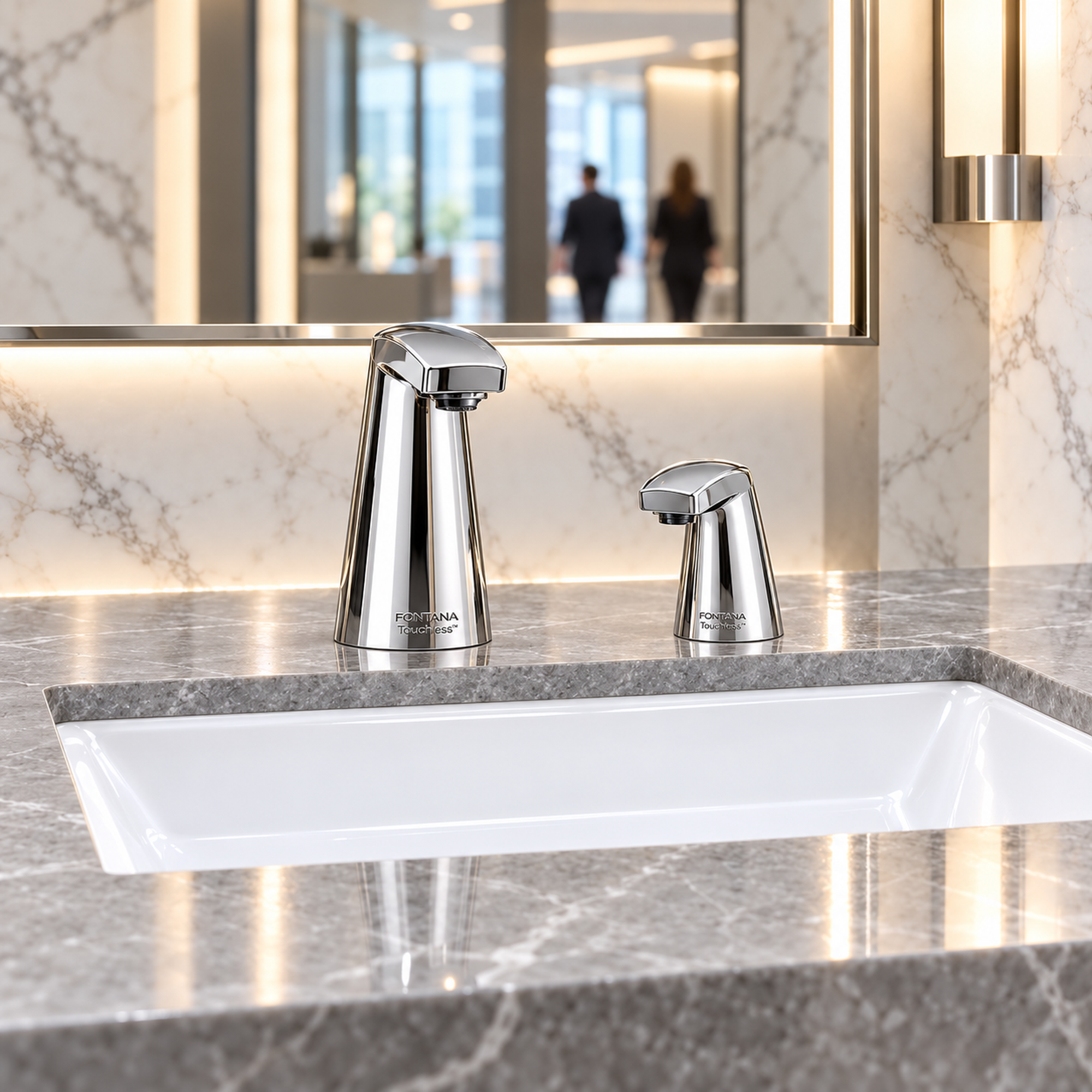
Installation Simplicity Begins With Predictable Coordination
An easy-to-install commercial touchless faucet is not simply a fixture that attaches quickly to a sink. For a plumbing contractor, the more important question is whether the complete installation can be understood before trim-out begins. Mounting dimensions, supply connections, sensing position, control location, power requirements and service access should work together as one coordinated assembly.
Clear Rough-In
Defined mounting, supply and power requirements allow the contractor to coordinate work before counters and walls are completed.
Consistent Stations
One correctly coordinated wash station can establish the installation method for many repeated restroom positions.
Serviceable Equipment
Reachable filters, solenoids, shutoffs and power components make commissioning and future maintenance more practical.
Organized Turnover
Repeated installation conditions allow sensing, flow and shutoff performance to be checked systematically.
Read More
Touchless fixtures still require disciplined plumbing coordination. The faucet must be correctly positioned relative to the basin, stream placement must stay within the intended wash area, operating pressure must remain within the selected product’s requirements and controls must remain accessible after adjacent trades complete their work.
Installation efficiency comes from reducing uncertainty rather than eliminating necessary engineering. When the first approved wash station establishes the correct geometry and service approach, subsequent installations can follow the same method instead of becoming separate field-design exercises.
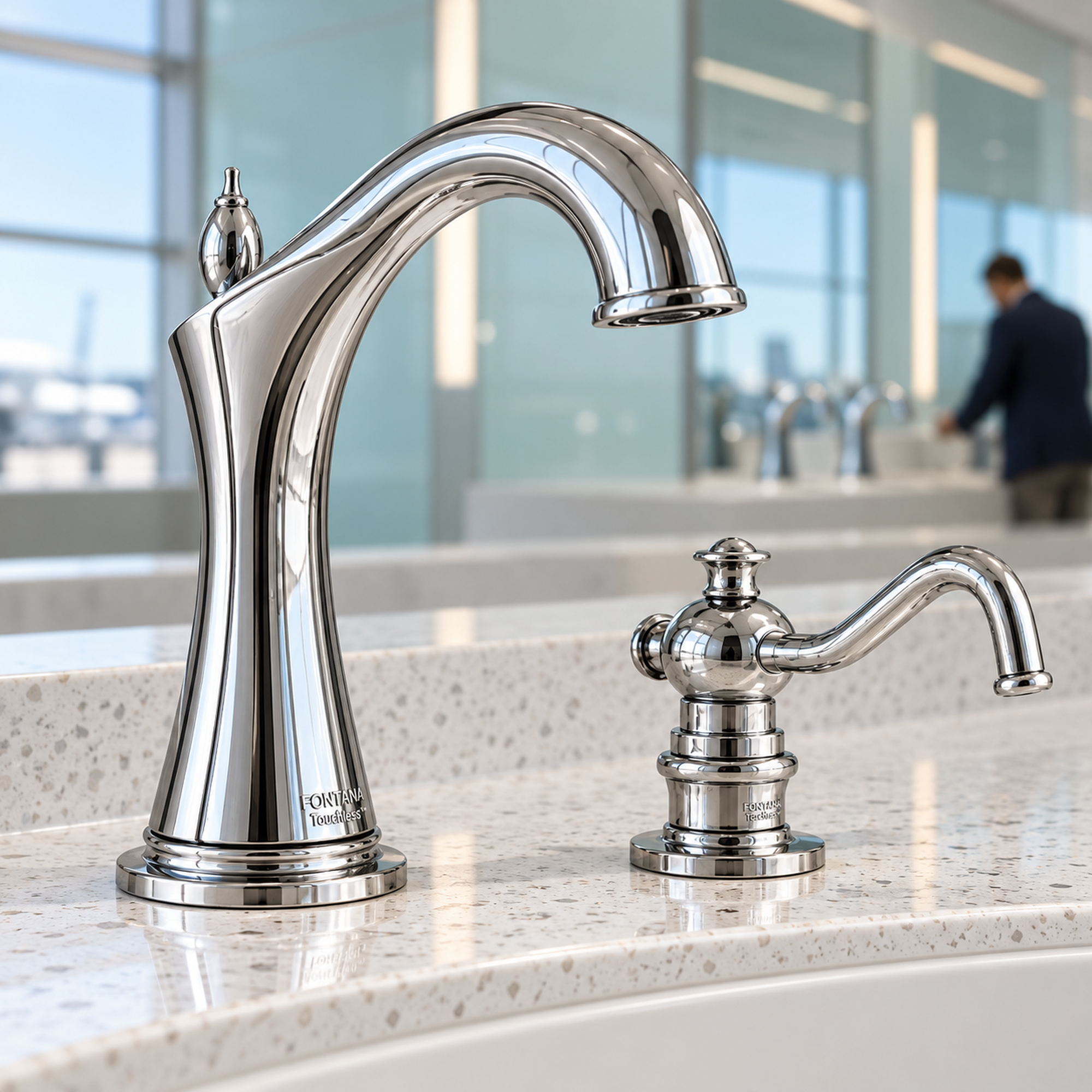
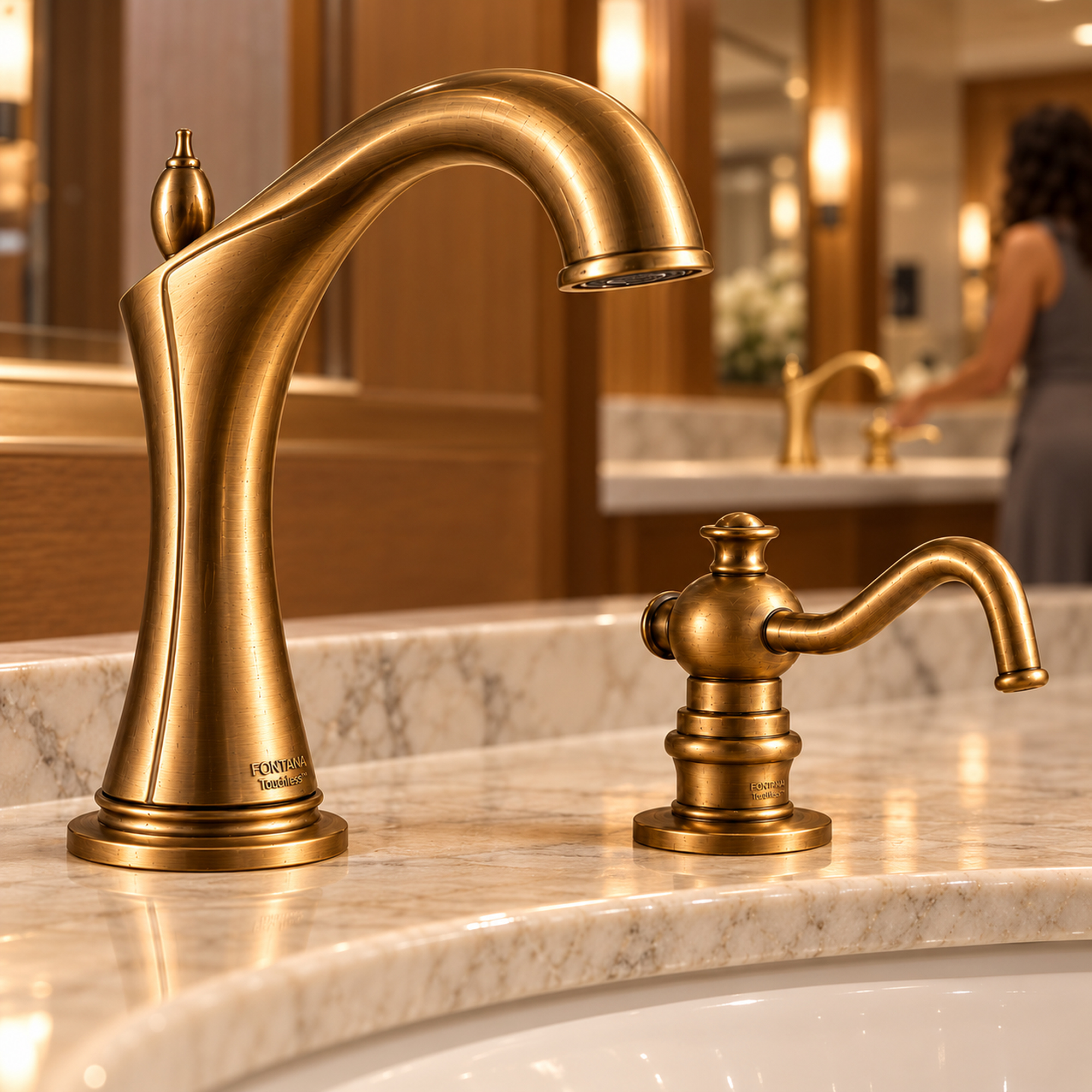
One Installation Strategy Can Support Different Commercial Interiors
Commercial projects may require different finishes and architectural expressions while still benefiting from a repeatable installation method. Visible finishes can change without requiring the plumbing team to reinvent the underlying coordination strategy.
Where Better Coordination Reduces Contractor Rework
Installation efficiency is most valuable when it eliminates conflicts before they reach the field. Contractors benefit when architectural, plumbing and electrical information describes the same finished wash station.
| Coordination Area | Typical Field Risk | Installation-Friendly Approach | Construction Benefit |
|---|---|---|---|
| Mounting | Deck penetrations or wall rough-ins conflict with finished architecture. | Confirm exact mounting type and dimensional requirements during submittal review. | Reduces drilling, patching and relocation. |
| Supply Routing | Water lines interfere with traps, counters or controls. | Coordinate the complete under-counter or in-wall assembly. | Cleaner trim-out and fewer field modifications. |
| Power | Transformer, wiring or battery access is identified too late. | Establish the power strategy before rough-in. | Reduces electrical rework. |
| Control Components | Solenoid or controller becomes inaccessible after finishes. | Reserve a practical service zone. | Faster commissioning and maintenance. |
| Sensor Geometry | Basin, backsplash or surrounding surfaces create poor sensing. | Coordinate final sensor position with the actual sink assembly. | Reduces nuisance callbacks. |
| Isolation | One station requires shutdown of a larger fixture bank. | Provide practical local isolation where appropriate. | Simplifies testing and future service. |
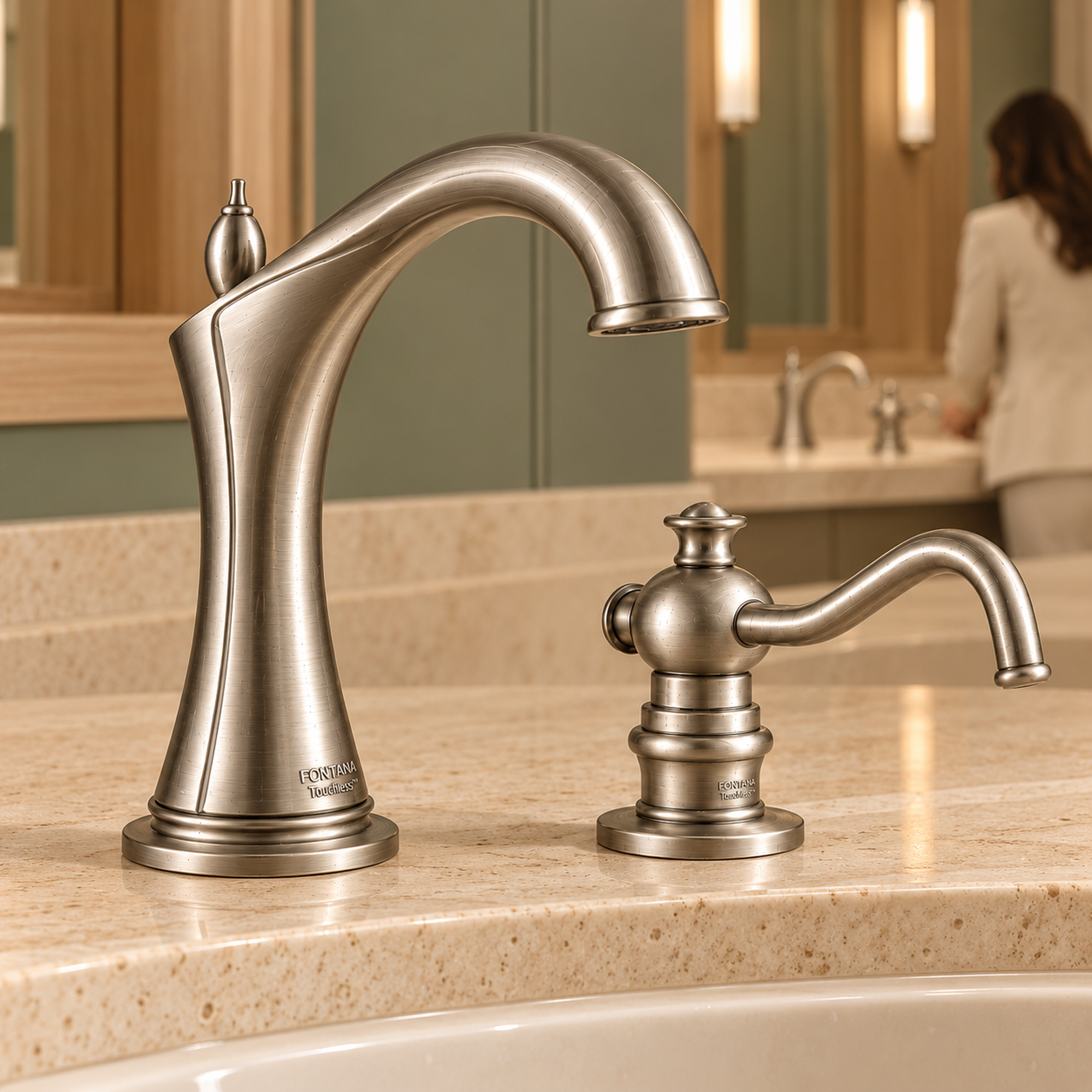
Fixture Finishes Can Change Without Changing Core Installation Logic
Airports, offices, theaters, hospitality environments and public venues may require different visible finishes. Contractors still need the same fundamental information: mounting, water supply, power, sensing geometry and service access.
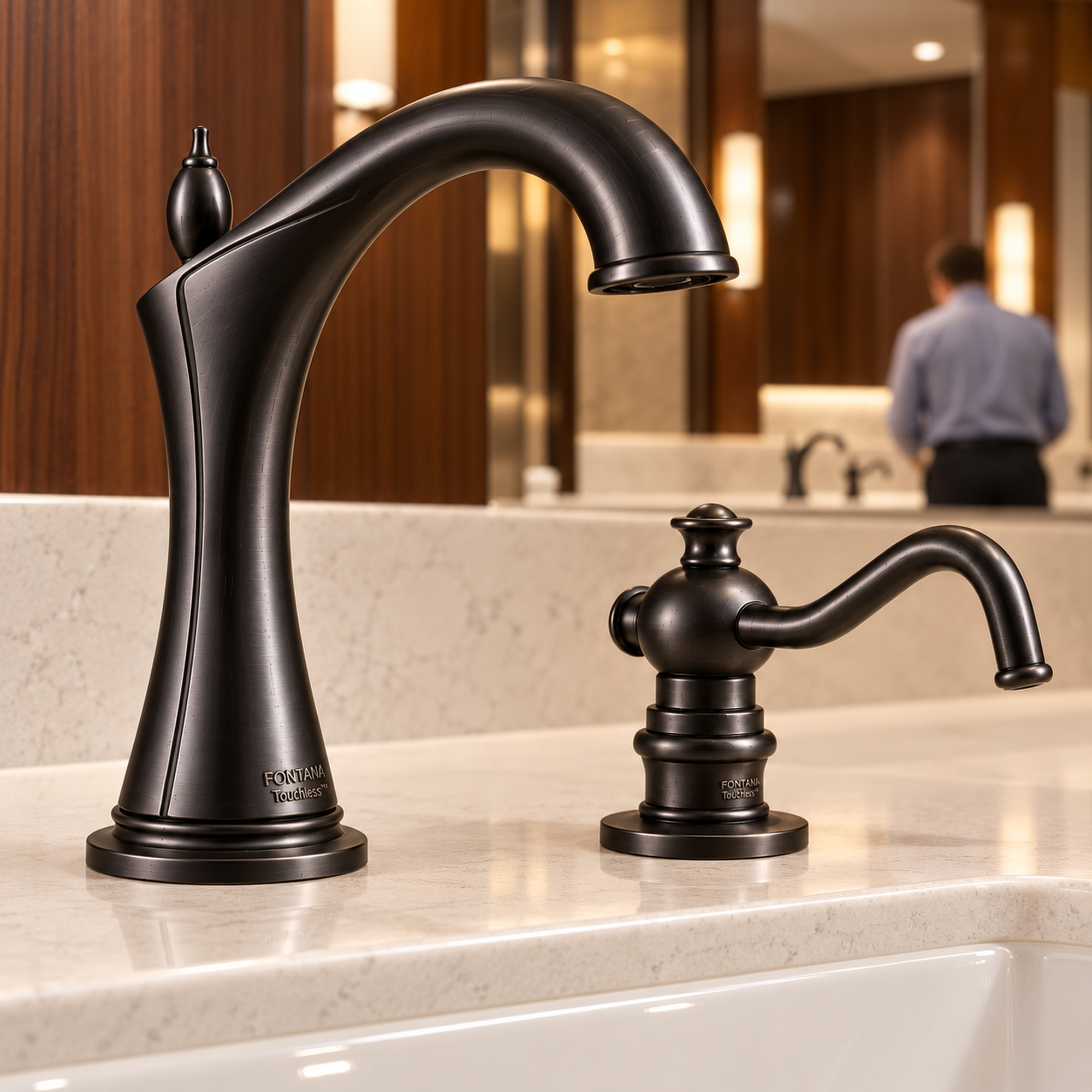

A Repeatable Installation Process Reduces Field Rework
Contractor efficiency begins before fixtures arrive at the jobsite. Submittal coordination, rough-in verification, organized trim-out and final commissioning form one continuous installation process.
Confirm the Actual Fixture Before Construction Advances
Confirm mounting type, dimensions, connections, power requirements, controls and service clearances against the actual scheduled model.
Check the Complete Assembly
Review supply locations, counter penetrations, wall conditions, electrical pathways and access zones before finished construction makes changes expensive.
Keep Service Components Reachable
Mount fixtures, connect water and power, secure controllers and confirm that normal service components remain reachable.
Test Under Finished Conditions
Test leaks, sensing, shutoff, stream placement and multiple adjacent stations under the final installed conditions.
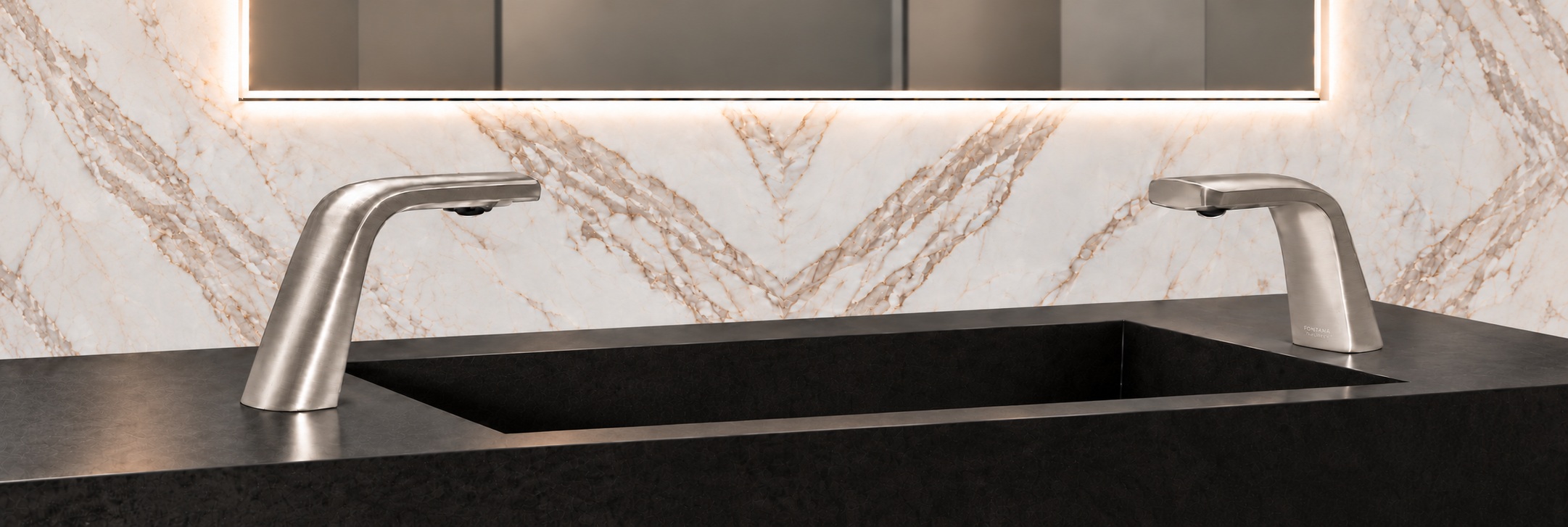
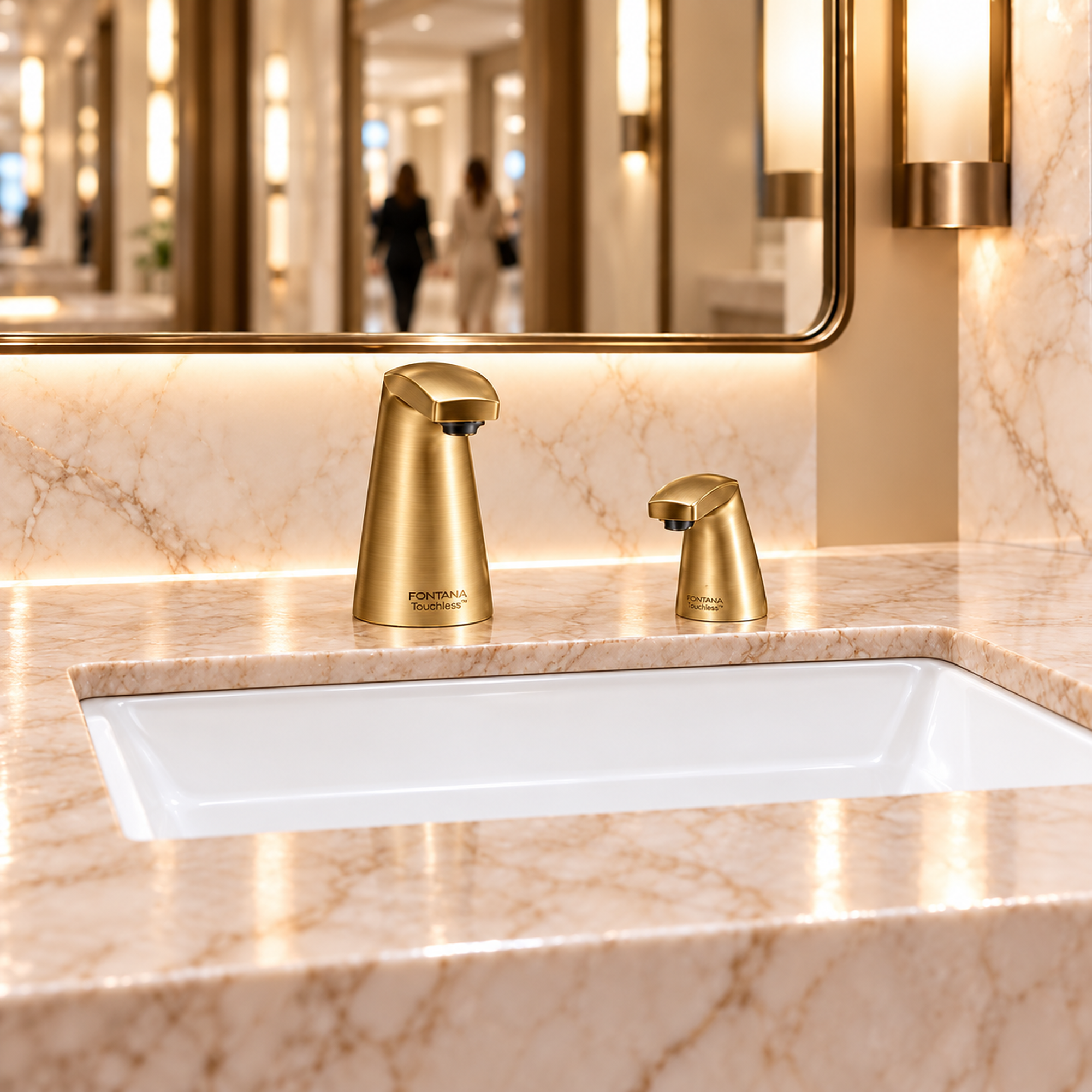
Faucet-and-Soap Sets Can Simplify Visual and Installation Coordination
Coordinating faucet and soap-dispenser positions gives architects a cleaner visual rhythm while giving contractors a more predictable station layout. The benefit is strongest when the below-counter controls, soap reservoir, power and supply piping are also organized around the same repeatable service zone.
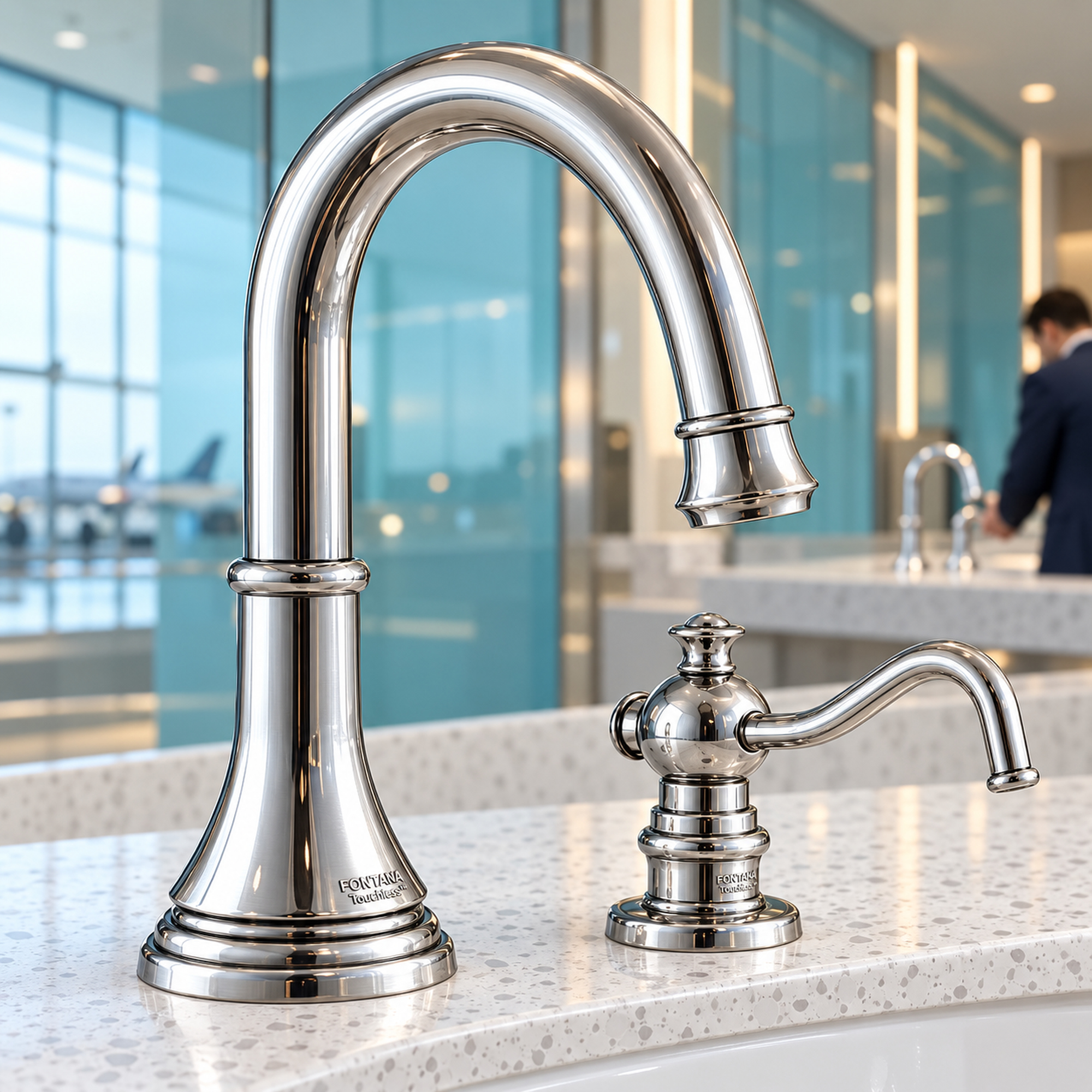

Read More
Coordinated fixture sets can also simplify submittal review because the architect, plumbing engineer and contractor can evaluate the wash station as a system rather than treating each visible component as an unrelated object.
The installation team should still verify reservoir locations, control modules, shutoffs, transformers or batteries and clearances for waste piping. Clean visual coordination above the counter should be matched by practical service coordination below it.
Square Product Views Keep Technical Details Visible
Using properly proportioned square imagery makes it easier for architects, contractors and facility teams to see the complete fixture set without losing important product geometry to excessive cropping.
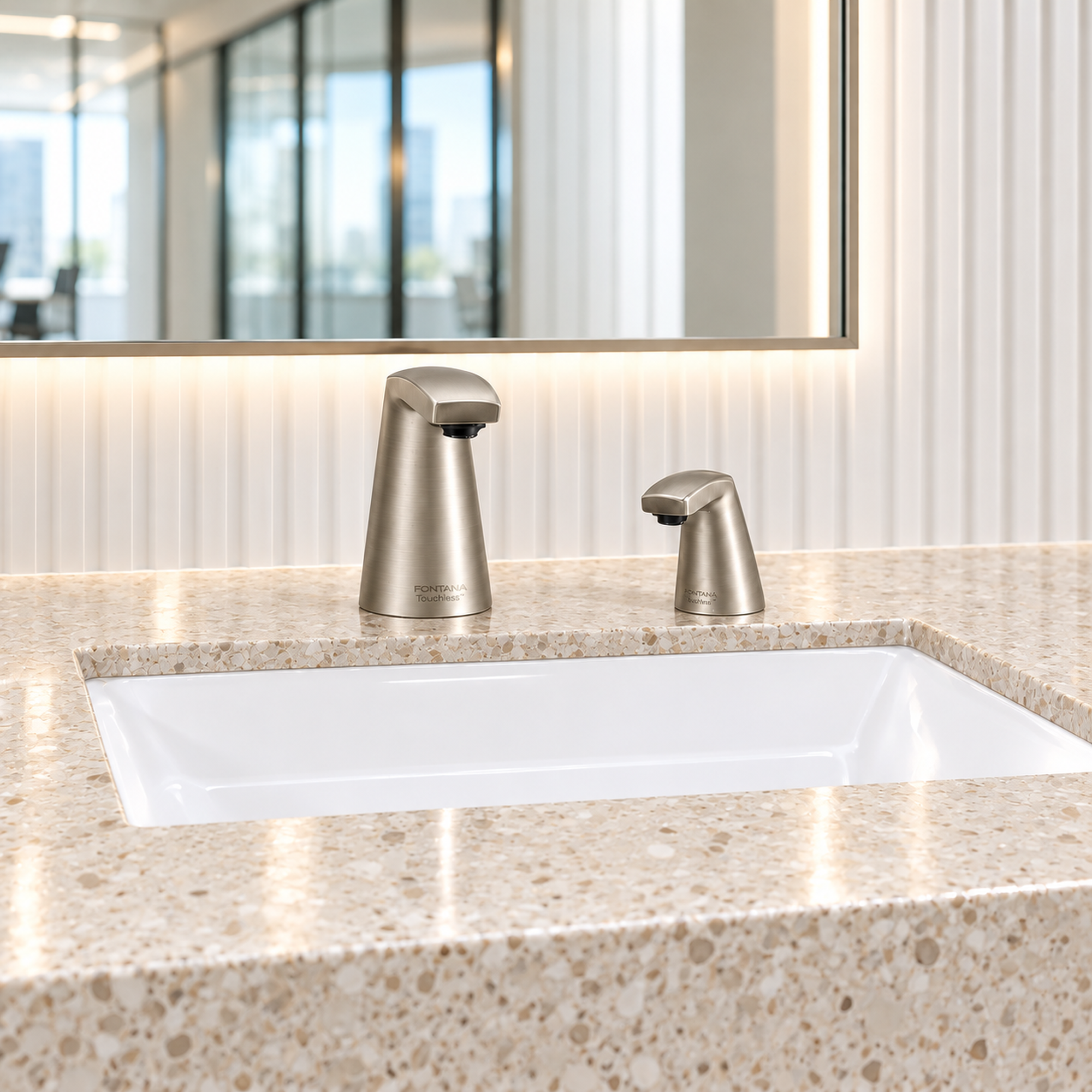
Installation Simplicity Reduces Repetitive Field Decisions
Labor efficiency is created when installers can repeat a known assembly rather than pause to resolve mounting, connection or control conflicts at every fixture. This becomes increasingly valuable as the fixture count grows.
Read More
Actual installation hours depend on project conditions, so the benefit should not be represented as one universal labor-saving percentage. New construction with standardized rough-ins can be very different from renovation work involving existing walls, countertops and supply locations.
The practical contractor advantage is reduced uncertainty: fewer interruptions, fewer requests for clarification and fewer modifications to adjacent work.
A Fixture Conflict Can Affect More Than the Plumbing Trade
Moving one wash-station component after construction advances may require changes to stone, millwork, electrical work, plumbing and access panels. Early coordination helps prevent one fixture issue from becoming a multi-trade delay.
Read More
Repeated commercial restrooms magnify this risk. If a rough-in assumption is wrong at the typical detail, that error can be reproduced throughout several rooms before it is discovered. Contractor review of fixture submittals and initial mockups can therefore protect the overall construction schedule.
Contractor-Friendly Installation Should Remain Facility-Friendly
An installation is not truly efficient if routine service later requires destructive access. Contractors and facility teams both benefit when the components most likely to need inspection, adjustment or replacement remain reachable.
- Keep fixture shutoffs accessible.
- Provide access to filters and strainers.
- Maintain clear access to solenoid assemblies.
- Avoid trapping controllers behind fixed finishes.
- Provide battery access where battery power is used.
- Identify transformer locations on hardwired systems.
- Document final sensor settings.
- Keep model-specific service information available.
Information the Installer Should Receive Before Mobilization
Plumbing Information
- Exact fixture model and mounting type
- Rough-in and mounting dimensions
- Supply connection requirements
- Required design flow
- Operating pressure criteria
- Mixing method
- Filter or strainer location
- Fixture-level isolation strategy
Power & Controls Information
- AC, DC, battery or hybrid power
- Transformer responsibility
- Low-voltage pathway
- Controller mounting location
- Solenoid location
- Sensor adjustment procedure
- Battery access where applicable
- Commissioning responsibility
Installation Principle
“Easy to install” should mean the fixture can be coordinated, mounted, connected, powered, tested and serviced through a clear repeatable process. It should never imply that rough-in verification, electrical coordination or commissioning can be skipped.
Installation Ends Only After the Fixture Is Verified
Touchless fixtures should be commissioned under final installed conditions. The actual basin, backsplash, lighting and surrounding surfaces can affect how the wash station performs. Contractors should therefore verify more than the presence of water.
| Check | Field Verification | Construction Benefit |
|---|---|---|
| Leak Test | Inspect faucet, valve and supply connections. | Resolves connection issues before turnover. |
| Sensor Activation | Test realistic hand positions and user approaches. | Reduces nuisance callbacks. |
| Automatic Shutoff | Confirm predictable shutoff after hands leave the sensing zone. | Confirms correct operating sequence. |
| Stream Placement | Confirm water lands within the intended basin area. | Reduces splash-related punch-list work. |
| Power | Verify the scheduled battery, AC, DC or hybrid configuration. | Prevents turnover with incomplete electrical scope. |
| Service Access | Demonstrate access to controls, filtration, valves and power. | Protects future service efficiency. |
| Fixture Bank | Operate adjacent stations simultaneously. | Confirms pressure and sensing stability across the installation. |
Read More
Final review should also verify that other trades have not blocked the service condition originally established during rough-in. Waste piping, shelves, millwork and access panels can change the usable service area after the faucet itself has been installed.
Recording model numbers and field-adjusted settings during turnover gives the owner a maintenance baseline and reduces the need for later technicians to reconstruct the original installation.
Commercial Project Context for Installation Planning
Large public projects illustrate where installation consistency, coordination and service access become especially important.
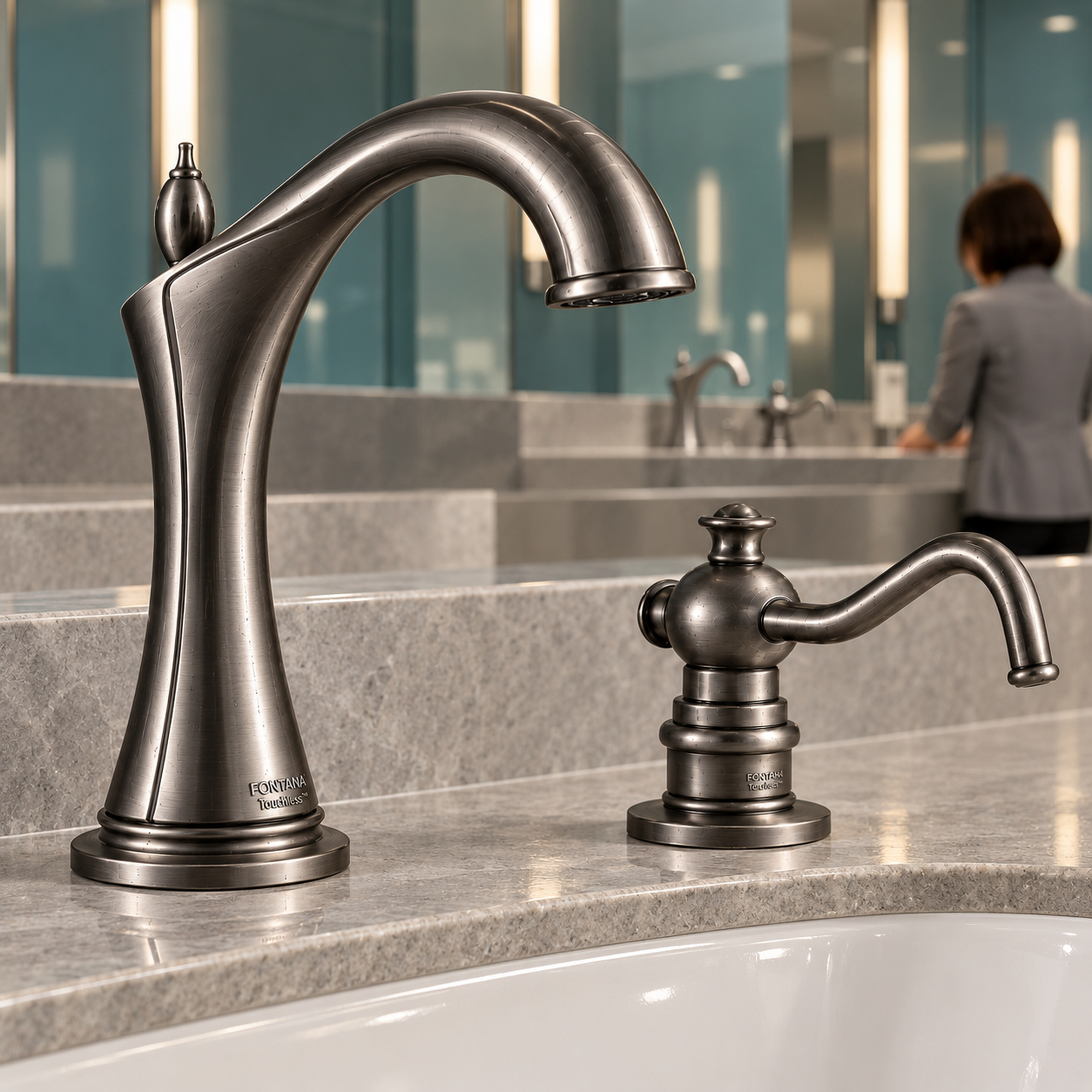
Fontana Touchless Faucets for the New Las Vegas MLB Stadium
Stadium-scale restroom programs make repeatable fixture details and early trade coordination increasingly valuable.
Chrome Touchless Faucets for Memorial Stadium
Repeated public wash stations reward standardized rough-ins, service access and commissioning procedures.
Virginia Architectural Faucets
Established venue conditions demonstrate the value of matching fixture installation to existing architectural constraints.
Hershey Theatre, Pennsylvania
Renovation-sensitive facilities benefit from fixture strategies that minimize unnecessary disturbance to surrounding construction.
Plumbing, Installation and Commercial Restroom Guidance
Supporting technical resources are linked through descriptive titles rather than displaying raw URLs.
Read More Related Resources
Installation Questions for Commercial Touchless Fixtures
What makes a commercial touchless faucet easier to install?
Clear rough-in information, appropriate mounting, defined power requirements and accessible controls reduce field interpretation during trim-out.
Why should power be coordinated early?
Battery, AC, DC and hybrid configurations create different requirements for transformers, wiring and service access. Early decisions help prevent conflicts with finished construction.
Why does service access matter during construction?
The installer may need to adjust or test the sensor, solenoid, filtration, power supply or shutoff. Accessible components reduce commissioning time and future service labor.
Can the same installation detail be repeated?
Where fixture models, basins and power arrangements are consistent, one coordinated typical detail can support multiple wash stations, provided each location is checked for project-specific conditions.
Why should sensor commissioning happen after finishes are complete?
Final basin geometry, lighting and surrounding materials can influence sensing behavior. Testing the completed installation provides a more useful operational baseline.
Does installation simplicity also benefit facility maintenance?
Yes. Clearly arranged shutoffs, filters, controllers and power components create a more understandable system for inspection and future servicing.
Installation Simplicity Is Coordination Simplicity
Plumbing contractors benefit most from touchless fixture systems that remove avoidable uncertainty from construction. Clearly defined mounting, predictable water connections, coordinated power options, accessible controls and repeatable commissioning procedures allow the installation team to move efficiently from one fixture bank to the next.
For large commercial projects, this repeatability can help reduce field conflicts, protect trim-out schedules and create a cleaner transition from construction to facility operations. The strongest specification is therefore not simply a faucet described as easy to install, but a fixture family that can be coordinated early, installed consistently and maintained logically throughout the life of the building.